Showing posts with label the book thief. Show all posts

Tuesday, 13 June 2017

Top Ten Tuesday | Daddy, Daddy Cool


Top Ten Tuesday is a weekly feature created at The Broke and the Bookish. Each week you compile a list of ten books which coincide with that week's theme. You can find everything you need to know about joining in here!


This week's theme is a Father's Day freebie, so I figured I'd talk about some of my favourite father/father figure-daughter relationships in fiction!

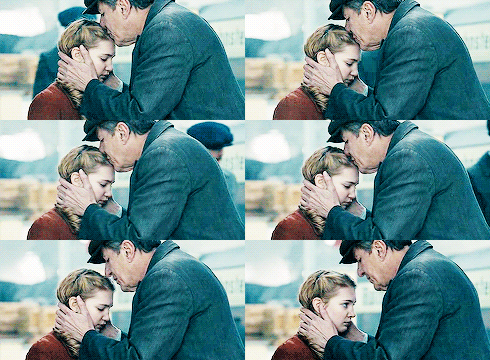
Hans Hubermann and Liesel Meminger from The Book Thief by Markus Zusak

I'm not such a good reader myself, you know. We'll have to help each other out.’


Will I ever be over The Book Thief? Probably not, no. It's not everyone's cup of tea but the book made me bawl like a baby and the relationship between Hans and Liesel has to be one of the purest, most loving relationships in fiction. I love Rosa, too - as a mother figure she has a brash charm all her own - but Hans is too sweet a man to leave off this list.

Atticus and Jean Louise Finch from To Kill a Mockingbird by Harper Lee

If you can learn a simple trick, Scout, you'll get along a lot better with all kinds of folks. You never really understand a person until you consider things from his point of view … until you climb into his skin and walk around in it.’


Atticus Finch is the original DILF and I love his relationship with Scout. He has to be one of the most soothing, comforting fathers in fiction and I adore him. I've chosen to ignore the existence of Go Set a Watchman because I'm still not certain Harper Lee really wanted that book to be published.

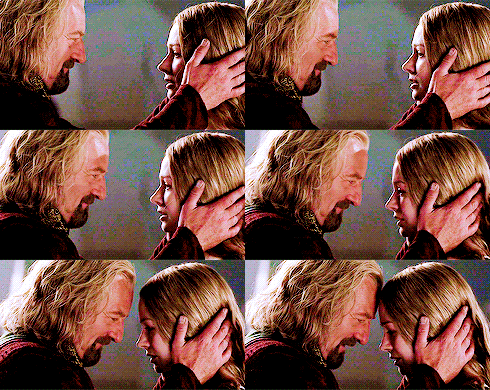
Theoden and Eowyn from The Lord of the Rings by J.R.R. Tolkien

Duty? No... I would have you smile again, not grieve for those whose time has come. You shall live to see these days renewed.’


I haven't read the books - sorry! - but I adore the films and I love the relationship between Eowyn and her uncle. He could have been a better guardian but he could have been a hell of a lot worse - looking at you, Denethor - and there's no denying there's a genuine love and affection between them. Eowyn loves him enough to stay by him and protect him even when Rohan was a dangerous place for her and her brother, so there's clearly a strong bond there.

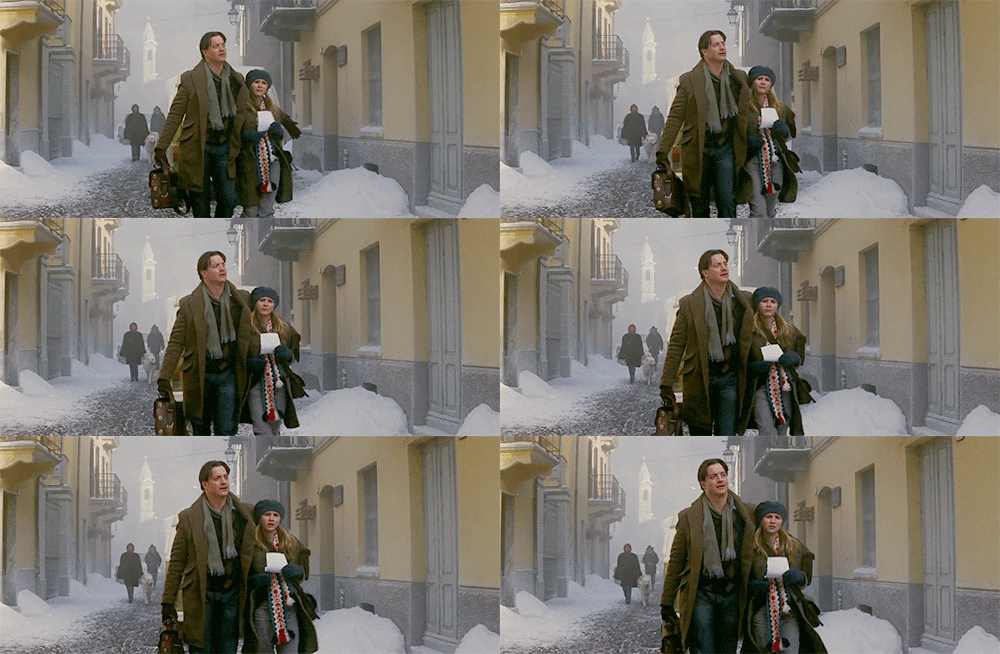
Mo and Meggie Folchart from the Inkworld trilogy by Cornelia Funke

‘I don't know any father who's more besotted with his daughter than yours.


I loved the Inkworld books when I was younger and it's such a shame the 2008 adaptation of Inkheart was pretty poor because Brendan Fraser was a great choice for Mo. To be completely honest with you Meggie started to irritate me as the books went along, I do think it's a shame her story became more along the lines of choosing which boy she loved more while Mo got all of the action, but their relationship is a lovely one and they're clearly very close.

Mr. and Elizabeth Bennet from Pride and Prejudice by Jane Austen

‘Your mother will never see you again if you do not marry Mr. Collins, and I will never see you again if you do.


It's so hard to find gifs of these two! Also yes, I prefer the 2005 version to the 1995 version. Come at me, bro. Mr. Bennet is probably my least favourite on this list, on account of him not being a very good father. His relationship with Elizabeth is lovely, but he doesn't hide it from his four other daughters that she's his favourite and therefore the one most worthy of his time. Mrs. Bennet is often seen as a silly woman there for comedic effect and while the woman is pretty insufferable, she's actually the better parent when we consider the Bennets' situation; should Mr. Bennet die their house will no longer be theirs, and Mrs. Bennet wants her daughters to be provided for and safe in a society that won't let them inherit their father's house because they don't have a penis. That they might marry someone wealthy is a bonus and isn't unusual for the time - a big part of marriage was the chance to climb up the social ladder. So Mr. Bennet's relationship with Elizabeth is a lovely one, but he's not the best parent and I think Elizabeth knows that, too.

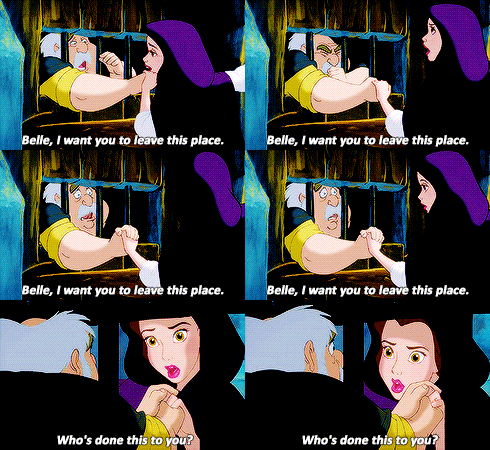
Belle and Maurice from Beauty and the Beast (1991)

‘My daughter? Odd? Where did you get an idea like that?


Maurice is a bit of a ditz, clearly intelligent but not so people smart, but it's clear he thinks Belle is the best thing since sliced bread (and so he should). Their relationship is clearly a close one considering Belle literally gives up her freedom to set her father free, something I'm sure she would have done whether he was sick or not. The Broadway production of Beauty and the Beast added an extra song for Belle and her father, 'No Matter What', and it's one of my favourites.

Sara and Captain Crewe from A Little Princess (1995)

‘I believe that you are, and always will be, my little princess.


This is one of those occasions where I prefer an adaptation to the original book; Frances Hodgson Burnett's book is lovely, and I recommend reading it, but I grew up with the 1995 adaptation and I'm so fond of it. It still makes me cry. Captain Crewe (played by Liam Cunningham, aka Davos Seaworth in Game of Thrones if, like me, you've been trying to figure out where you've seen him before) is a doting father and and all-round very nice chap and his relationship with Sara makes me feel feelings.

Annie and Mr. Warbucks from Annie (1982)

‘Absolutely not! I'm a businessman. I love money, I love power, I love capitalism. I do not now and never will love children.


Unfortunately the gif is from the 1999 adaptation, which isn't a bad adaptation but isn't the one I grew up with, as yet again the gifs are scarce. Yes it's corny, but I love Annie and I love the way that it encourages the idea that children are allowed to love their birth parents and their adopted parents.

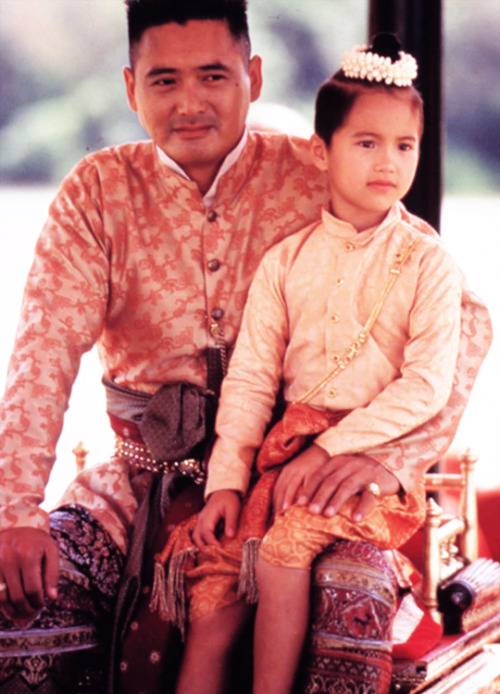
King Mongkut and Princess Fa-Ying from Anna and the King (1999)

‘I will be there in your dreams, as you will be in mine.


Really, internet? Not a single gif?! Oh well. Anna and the King is essentially a more serious version of The King and I without any of the sing-a-longs, and it's probably one of my favourite movies. It's not perfect, but I get swept away by it every time I watch it. The relationship between King Mongkut and his monkey-obsessed daughter, Princess Fa-Ying, is so sweet and if you watch the film you'll probably cry.

Fa Zhou and Fa Mulan from Mulan (1998)

‘The greatest gift and honour is having you for a daughter.


Fa Zhou says some things at the beginning of this movie that certainly hurt his daughter's feelings, but it's clear the two of them are close: Mulan literally risks death, by execution or warfare, by posing as a man and taking his place in the army so he doesn't have to go to what's likely to be his certain death now that he is old and fairly frail.

What did you talk about this week?

Tuesday, 2 February 2016

Top Ten Tuesday | A Whole New World


Top Ten Tuesday is a weekly feature created at The Broke and the Bookish. Each week you compile a list of ten books which coincide with that week's theme. You can find everything you need to know about joining in here!

This week's theme is 'Top Ten Historical Settings You Love/ Ten Historical Settings You'd Love To See or Top Futuristic Books You Love/Ten Futuristic Societies I'd Love To Read in Books', but instead of talking about generic settings this week I'm going to talk about some books, five historical fiction and five sci-fi, in which the world building is amazing.


Historical Fiction


The Miniaturist by Jessie Burton: I still can't quite believe this is Burton's debut because it's one of the most stunningly written books I've ever read. Set in 17th century Amsterdam, Burton fills each page with sumptuous detail and lyrical prose. So worth reading!

Burial Rites by Hannah Kent: Set in 19th century Iceland, Hannah Kent's debut novel is the perfect novel for the winter because the bitter cold oozes from the pages. This is also a book that'll break your heart in two. Just so you know.

Year of Wonders by Geraldine Brooks: Year of Wonders is the novelisation of a true event in which a village called Eyam in Derbyshire closed itself off to the world when its residents began to succumb to the plague, in hopes of preventing the spread of the disease. The village itself almost becomes a character in this novel, and Brooks describes the isolation wonderfully.

The Night Circus by Erin Morgenstern: I didn't love this novel as much as I'd hoped I would, but there's no denying that Morgenstern's circus is wonderfully fantastical. I want to go to the Night Circus, too.

The Book Thief by Markus Zusak: What I love about this novel is that the setting's unusual. So many historical fiction books set during the Second World War are set in Britain, France or America, so it was so refreshing to read a book set in Germany during the war which painted Germans fairly. It's good to remember that the vast majority of the German and Austrian population hated Hitler more than anyone else did.


Science Fiction


The Hunger Games by Suzanne Collins: I love dystopian fiction that could be a fathomable reality, and in my opinion Collins succeeded with this trilogy. If we were to broadcast a show like The Hunger Games you can guarantee people would watch it, and that's what makes these books so terrifying.

Feed by Mira Grant: Ah Feed, my love. What I love about Feed is that it's a post-post-apocalyptic novel. Zombies exist but not every single society in the world has collapsed. Grant's world building is so well thought out and thorough. I just love this book!

The Long Way to a Small, Angry Planet by Becky Chambers: I think I'd marry this book if I could. It includes so many things that I'm passionate about and Chambers' world building is astounding. Read this!

Delirium by Lauren Oliver: We all know by now how much of a trainwreck Requiem was, but I thought Delirium was a beautifully written YA dystopia - in all honesty I wish it had been a standalone. When I first heard it was set in a world without love I thought it was going to be really cheesy, but Lauren Oliver has put a lot of thought into what a world without love would really mean and it's so bleak. Wonderful novel, just pretend the latter two don't exist.

The Lunar Chronicles by Marissa Meyer: Obviously this series was going to be on the list. I love it and I love Marissa Meyer's futuristic universe. No more need be said.

What did you talk about this week?

Friday, 1 May 2015

My Favourite Fictional Fathers/Father Figures

It's my Dad's birthday today, so I thought I'd share with you some of my favourite fathers, and father figures, from fiction!


Hans Hubermann from The Book Thief by Markus Zusak

I don't think I've met a single person who loved this book who didn't also love Hans. He's such a comforting presence throughout the book, which is just what's needed when you're reading a story set in Nazi Germany that also happens to be narrated by death. He was definitely one of my favourites.


Silas from The Graveyard Book by Neil Gaiman

Bod does have a father in Mr. Owens, but it's Silas we see more of throughout The Graveyard Book and it's Silas who leaves the bigger impact on Bod. I loved their relationship; while Mr. and Mrs. Owens were loving parents, Silas became that cool godfather who teaches you things your parents don't want you to know yet.


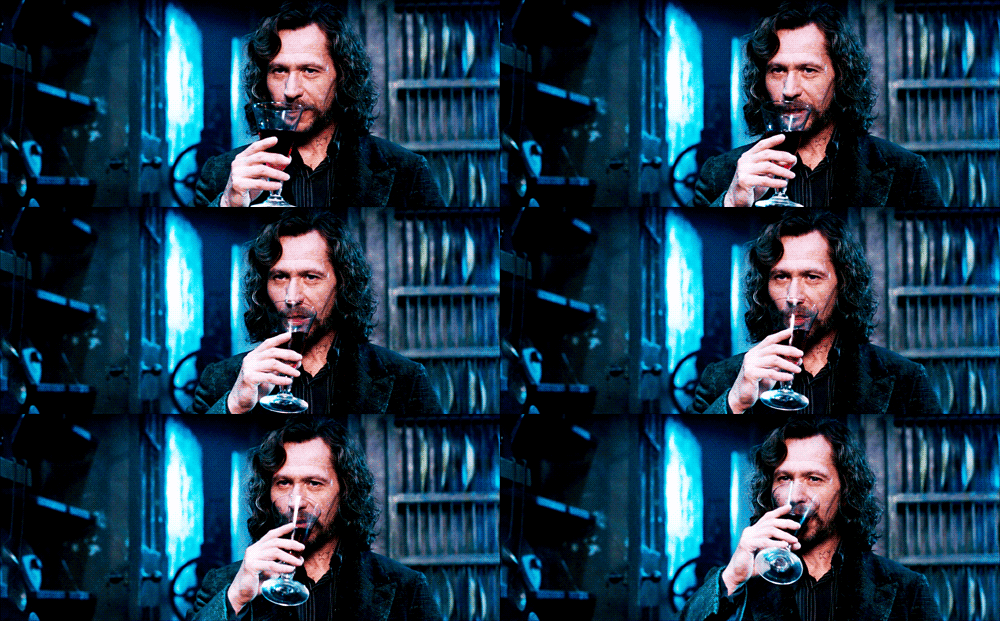
Sirius Black from the Harry Potter series by J. K. Rowling

Speaking of cool godfathers, my list wouldn't be complete without mention of Sirius Black. Some people may argue he's not exactly an ideal role model but at least, unlike Dumbledore, he never cared for Harry while the whole time knowing he was being raised to die at the right moment. Sirius is unfailingly loyal - his animagus is a dog, for heaven's sake - and he's funny and brave and loving. James was his brother by everything but blood, and after his death Sirius is never the same. It still breaks my heart that Sirius never got the chance to clear his name and live as a free man, buying himself a nice little bachelor pad and taking Harry away from his horrid relatives.


Denny Hall from If I Stay by Gayle Forman

I loved Mia's parents so much, especially her father. Denny is witty and fun and adorable, and I really liked the way he was portrayed in the film, too. I found the advice he gave Mia so comforting to read, and it certainly doesn't hurt that I picture him as a hot kind of dad...

Who are some of your favourite fathers/father figures?

Thursday, 30 April 2015

Z is for Zusak | Blogging from A to Z

The Book Thief
by Markus Zusak

How could I mention anyone other than Markus Zusak for 'z'? In fact on the final day of the A to Z challenge it seems pretty fitting to mention a book that's narrated by Death himself.


I only read The Book Thief after a friend of mine bought it for me for Christmas. I love historical fiction, but for the most part I stay away from fiction set during the Second World War, not only because I just don't find Modern history quite as interesting as Medieval and Early Modern history, but also because it's often just so upsetting. I love it when books bring out emotions in me, whether they make me happy, furious or bereft, but The Holocaust is something else entirely. It's a dark period of our history that should never be forgotten about, but it's so, so upsetting.

I'm so glad that I did read it, though. Like many of the books I love now I read it while I was at university and it made me cry more than once. Not just a few little tears, either, this book made me weep. What I love most about it is that it's just so different, and I don't even mean the whole 'narrated by Death' thing (though that is an interesting element!); another reason I tend to stay from WW2 fiction is because it's often quite samey, but in The Book Thief we're told the story of a little girl from Germany during the Second World War. We see Germany portrayed not as a country brimming with mini-Hitlers, but as a country who is suffering just as much as the rest of the world, perhaps even more so.

If you haven't read it, I highly recommend it.

Wednesday, 28 January 2015

What's Up Wednesday! | 28/01/15

What's Up Wednesday is a weekly blog hop created by Jaime Morrow and Erin L. Funk as a way for writers and readers to stay in touch!

What I'm Reading

Since last week I've read The Meat Tree by Gwyneth Lewis, which is probably the weirdest thing I've read so far this year, and The Crown by Nancy Bilyeau. The beginning of the novel is a little slow - which you wouldn't expect considering the majority of the beginning takes place in the Tower of London! - but with a little patience things soon livened up. If you're interested in reading some female-led historical crime then I recommend giving this book a try.

On Monday I finally picked up Half Bad by Sally Green which I'm reading alongside Shannon @ It Starts at Midnight!

What I'm Writing (+1 Writing Goal)

Right now I'm mainly working on short fiction. There are a few competitions and calls for submissions that are ending in a couple of weeks and I want to make sure I enter/submit as much as I can. A few of the competitions I'm aiming to enter are the Mslexia Short Story Competition, a competition for women writers, the BBC Opening Lines Competition, a chance to get your story read out on the radio, and The Winston Fletcher Fiction Prize, a competition for people who work in advertising, marketing and any related businesses.

Over the past few days I also had a little brainwave concerning a plot point in Bloodroot and Bracken that's been bothering me for a while, which is just what I need. I love it when solving a problem rekindles my passion for a project that's been around for a while. 

I haven't forgotten my latest character, Mab, either; I'm hoping to use some of the notes I have to write something for one of the competitions I'm entering.

Writing Goal: Redraft 'Dead Beautiful', finish 'Crying Wolf' and draft something from my Mab notes.

What Works For Me

Deadlines. I wish I was one of those people who did work gradually and got everything done and dusted before the deadline, and once in a blue moon it does happen, but for the most part I have the tendency to leave things to the last minute. Most of the time I don't even do it on purpose, I'll try getting something done but I can't seem to be able to get into the zone unless there's a deadline hanging over my head that's slowly but surely helping me to develop a stomach ulcer.

This proved especially true for me at the end of last week when I discovered that, if I wanted the chance to apply for funding, I needed to have sent off my PhD application no later than the 23rd. So on the 22nd and the 23rd I worked my arse off until it was done and dusted.

(In my defense a) I'd never worked on a PhD proposal before so I was a little lost, b) pretty much the entire week before I was away at a friend's and didn't have time or access to my laptop, and c) I thought I had until the end of January. It's still no excuse, but it makes me feel better.)

What Else Is New

It's been a strange sort of week. On Friday I sent off my first PhD application - eek! - then my parents and I ate Chinese food and I introduced them to The Book Thief; I haven't watched the film since it came out in the cinema so it was nice to see it again.

Then over the weekend both my best friend and my nana ended up in hospital. My best friend is now appendixless after hers had the nerve to burst, and my poor nana, who in my eyes is invincible, has been poorly for a little while. My uncle took her to hospital after her leg swelled up and it turns out she has septicemia. She was very poorly, but now she's wide awake and she's regaining some of the weight she's lost recently and keeping her food down, so fingers crossed she'll be back to her usual self very soon. 

I'm back at work this week after my week off, and you know you enjoy what you do when you're glad to get back. I'm very lucky to have a job that I enjoy. I've mentioned before that this year I'm working on the centenary of Alun Lewis, who was a Welsh English-language writer during WW2, and this week I got to proofread something very exciting: his unpublished novel. What could make that more exciting? Being able to read and hold the original manuscript. It's very cool.

So what's new with you?

Tuesday, 27 May 2014

Top Ten Tuesday | Books That Made Me Cry


Top Ten Tuesday is a weekly feature created at The Broke and the Bookish. Each week you compile a list of ten books which coincide with that week's theme. You can find out everything you need to know about joining in here!

This week's Top Ten Tuesday theme is a freebie - we can pick our own topic! So, as I'm currently in the middle of a trilogy that's breaking my heart more and more with each page I turn, I thought today would be a fitting time to share with you the top ten books that have made me cry. Unfortunately I could only think of nine, but that'll have to do!

I never used to be much of a crier when it came to books and films, but half way through adolescence I started becoming an emotional wreck whenever I watched or read something which, for whatever reason, really struck a chord with me. There are a lot of instances in which I haven't cried where I probably should - I've never found any of the deaths on Game of Thrones particuarly cry-worthy, nor did I cry while reading Mockingjay - but do something horrible to a character that I love and I'll weep.

So, in the order I read them, here are the ten nine books that made me weep:

Noughts & Crosses by Malorie Blackman
I first read this series, which deals with themes such as race and terrorism, back in my early teens, and it had a huge impact on me. The first book in the series has always been my favourite, though the other three are also brilliant in their own way, and it has the honour of being, to my knowledge, the first ever book that made me cry. This is still one of my all time favourite books, and if you haven't read it you're missing out.

Harry Potter is always going to be one of my all time favourite series, and as a lover of Sirius Black I'm sure those of you familiar with the series can understand why this book made the list. I'm still not over it.


Harry Potter and the Deathly Hallows by J.K. Rowling

I'm sure all of you can understand why this book's on the list. Oddly enough I didn't cry because of the deaths in this book, I actually cried because of the epilogue. It was so emotional to see these characters that I'd grown up with leading happy, peaceful lives, and knowing that as soon as I finished reading the epilogue the story I'd followed for the past ten years would be over.


Birdsong by Sebastian Faulks

During the first year of my A Levels I studied War Literature, and while Birdsong wasn't on our syllabus we were given it to read by our teacher and I'm so glad we were. If you're familiar with the BBC adaptation but haven't read the book please, please read it; the adaptation was appalling compared to how exquisite this book is. Considering it takes place during WW1 I'm sure you can imagine why this book made it onto my list, and now is the perfect time to read it as this year marks 100 years since the start of the war.


The Book Thief by Markus Zusak

WW2 this time, and I imagine even those of you who haven't read Zusak's masterpiece know someone who has; this book touches everyone who reads it in some way, and I'm not ashamed to say I cried more than once while reading it. If you've yet to read it then do pick it up, but I'd recommend the film adaptation too - it's a great adaptation!


The Fault in Our Stars by John Green

An obvious one, I know. Do I really need to say why this book made me cry? I'm pretty certain everyone in the world has read this book by now. I wouldn't call this book one of my all time favourite books by any means, but all the same I found it very emotional.


Glitches by Marissa Meyer

This is probably a bit of an odd one because it's really more of a short story than a book, but I cried reading this. If you're familiar with The Lunar Chronicles then you've probably read this (but if you haven't Meyer has made it available online here!) and if you're not familiar with The Lunar Chronicles then you need to make yourself familiar with them. It's one of my favourite series, and it's so fun. This is a prime example of what I mentioned earlier: getting emotional over a certain character.

Cinder is one of my favourite fictional heroines (why not check out my Top 5 YA Heroines?) and this story takes place before the events of Cinder when Cinder is a little girl. It just broke my heart to see her so little and so vulnerable and so unloved by the majority of the people around her. I definitely cried.


Feed by Mira Grant

And now we're onto the trilogy I mentioned above as currently being half way through. I can't say too much about this book because the reason it made me cry - and I mean really, really cry - is a huge spoiler for those of you who might want to read it. Those of you who have read this book, however, can probably guess why I cried so much at the end of this book. This is another case of growing attached to a character and then having my heart broken because of it. If you haven't read these books yet please do, I haven't even finished the second book yet but I'm already certain this is one of my new favourite trilogies.


Deadline by Mira Grant

Yep, that's right. The second book made me cry, too. In fact I'm not even half way through this book yet and I've already cried almost as much as I did at the end of the first one. Again, those of you familiar with this book can guess why it's already made me into an emotional wreck. Read this trilogy, but prepare yourself for heartbreak.


So those are the top ten nine books that have made me cry! Which books make you emotional?

Monday, 13 January 2014

Jess Suggests | Historical Fiction

Historical fiction is a genre which I love but a genre I am also very fussy with. There is a lot of fantastic Historical fiction out there, but there are also many books out there which, to me, are nothing more than royal family fanfiction which try to romanticise fairly brutal periods of our past. There must always be some fabrication - to an extent - to enjoy a piece of Historical fiction as a story rather than simply a list of facts, but when it isn't executed well it can be cringe-worthy.
     
I don't claim to be an expert, but as a lover of history (and someone who's currently working on a Historical fiction novel) I think I know a good piece of Historical fiction when I see one. So, without further ado, here are five Historical fiction novels you simply have to read:


by Celia Rees


Welcome to the world of young Mary Newbury, a world where simply being different can cost a person her life. Hidden until now in the pages of her diary, Mary’s startling story begins in 1659, the year her beloved grandmother is hanged in the public square as a witch. Mary narrowly escapes a similar fate, only to face intolerance and new danger among the Puritans in the New World. How long can she hide her true identity? Will she ever find a place where her healing powers will not be feared?

This is the novel which really got me into Historical fiction, as such it has a very special place on my bookshelf; particularly since I was lucky enough to meet the author and get my copy signed a couple of years ago. 
     
I first read this book when I was around thirteen, I saw it on the bookshelf and was drawn in, as many people are, by the haunting photograph on the cover. I've always loved history, particularly religious and supernatural history (even as a child, due to my somewhat morbid fascination with the weird, the wonderful, and the cruel) so this book was perfect for me. After the execution of her beloved grandmother, the enchanting Mary Newbury, blessed with peculiar healing powers, travels to the New World with a group of Puritans so as to save herself from the gallows. There she is caught between two cultures: the new settlers who may still hang her if they believe her to be a witch, and the Native American people who see themselves in her talents.
     
Witch Child is a marvellous mash-up of genres; it's both a piece of Historical fiction and also a YA novel told through Mary's insightful diary entries. So if you find Historical fiction boring, intimidating, or a little difficult to get into I highly recommend starting with this book! 


by Sebastian Faulks


Set before and during the great war, Birdsong captures the drama of that era on both a national and a personal scale. It is the story of Stephen, a young Englishman, who arrives in Amiens in 1910. Over the course of the novel he suffers a series of traumatic experiences, from the clandestine love affair that tears apart the family with whom he lives, to the unprecedented experiences of the war itself.


During the first year of my A Levels I was lucky enough to study war literature - specifically the First World War - and it was fascinating. Unfortunately Birdsong wasn't one of the texts on our course, but it was given to us to read anyway and I'm so glad it was. This book is stunning.

This novel uses the technique of telling the story through two different protagonists in two different time frames. This technique is often used in Historical fiction, and is ideal for readers out there who find history intimidating by giving them a modern day protagonist who is as curious and unsure about the past as they are. The reader follows both Stephen, a soldier fighting in the First World War, and Elizabeth, Stephen's granddaughter living in the 1960s who is trying to find out more about her grandfather.

Whether you're a fan of history or not this book will stay with you forever. It's haunting, moving and both incredibly brutal and very touching. This is one of those books you simply have to read before you die, but don't read it without a box of tissues nearby!


by C. J. Sansom

It is 1537, a time of revolution that sees the greatest changes in England since 1066. Henry VIII has proclaimed himself Supreme Head of the Church. The country is waking up to savage new laws, rigged trials and the greatest network of informers it has ever seen. And under the order of Thomas Cromwell, a team of commissioners is sent through the country to investigate the monasteries. There can only be oneoutcome: dissolution. 

But on the Sussex coast, at the monastery of Scarnsea, events have spiralled out of control. Cromwells Commissioner, Robin Singleton, has been found dead, his head severed from his body. His horrific murder is accompanied by equally sinister acts of sacrilege.

Matthew Shardlake, lawyer and long time supporter of Reform, has been sent by Cromwell to uncover the truth behind the dark happenings at Scarnsea. But investigation soon forces Shardlake to question everything that he hears, and everything that he intrinsically believes...

Historical Crime fiction is an undoubtedly popular strand of Historical fiction, and as far as I'm concerned C. J. Sansom is one of the best authors of this particular strand.

Dissolution is the first book in the Shardlake series, of which there are currently five books: Dissolution; Dark Fire; Sovereign; Revelation and Heartstone. Each book is a separate story in and of itself, but it involves the same characters who gradually develop over time, so I would recommend beginning with Dissolution and reading them in chronological order.

Our main character is lawyer Matthew Shardlake, a Reformer and hunchback living in Tudor England during the reign of Henry VIII. In Dissolution, Matthew is sent to a monastery in the south, which is in the process of being dissolved, to look into the murder of Cromwell's commissioner. Here his wits, his loyalty and the religious beliefs he holds most dear are put to the test.

If the Tudor era interests you then you should definitely give this series a try! Having studied History at university Sansom delivers an accurate portrayal of what living in Tudor England was like at a time of tremendous religious change.

This is easily one of my favourite series of all time.


by Markus Zusak

HERE IS A SMALL FACT - YOU ARE GOING TO DIE. 

1939. Nazi Germany. The country is holding its breath. Death has never been busier.

Liesel, a nine-year-old girl, is living with a foster family on Himmel Street. Her parents have been taken away to a concentration camp. Liesel steals books. This is her story and the story of the inhabitants of her street when the bombs begin to fall.

SOME IMPORTANT INFORMATION - THIS NOVEL IS NARRATED BY DEATH.

It's a small story, about: a girl, an accordionist, some fanatical Germans, a Jewish fist fighter, and quite a lot of thievery.

ANOTHER THING YOU SHOULD KNOW - DEATH WILL VISIT THE BOOK THIEF THREE TIMES.

The Book Thief is aimed towards younger audiences in the same way that Witch Child is, but that doesn't mean it can't be enjoyed by people of all ages. The protagonist, Liesel, is a child, but Liesel is not the narrator of the story. Instead our narrator is the age old figure of Death, and given that the novel is set in Nazi Germany during the Second World War Death is a very busy guy.

What makes this novel so wonderful is the way that it's told. Because our narrator is the all-knowing figure of Death we are often told about events - including character deaths - long before they happen, and yet when they do happen they're still heartbreaking even though we have spent the entire book expecting them. Zusak weaves an entire town of characters for his readers to fall absolutely in love with, and we fall in love with them because they're ordinary people living through an extraordinary era of history.

If you're a fan of fiction set during the Second World War but are a little tired of the typical narrator, this book is for you!


by Susan Fletcher

The Massacre of Glencoe happened at 5am on 13th February 1692 when thirty-eight members of the Macdonald clan were killed by soldiers who had enjoyed the clan's hospitality for the previous ten days. Many more died from exposure in the mountains. Fifty miles to the south Corrag is condemned for her involvement in the Massacre. She is imprisoned, accused of witchcraft and murder, and awaits her death. The era of witch-hunts is coming to an end - but Charles Leslie, an Irish propagandist and Jacobite, hears of the Massacre and, keen to publicise it, comes to the tollbooth to question her on the events of that night, and the weeks preceding it. Leslie seeks any information that will condemn the Protestant King William, rumoured to be involved in the massacre, and reinstate the Catholic James. Corrag agrees to talk to him so that the truth may be known about her involvement, and so that she may be less alone, in her final days. As she tells her story, Leslie questions his own beliefs and purpose - and a friendship develops between them that alters both their lives.

I started this post with witches, so it feels right to end it with witches.

Unlike Witch Child, Corrag is not a YA novel and I certainly wouldn't recommend it to people who prefer fast-paced novels. Fletcher takes her time to set the scene - her descriptions of the landscape are stunning - and coax you into the story, but it's so worth it.

The story follows Corrag, who has been imprisoned for witchcraft and murder following the Glencoe Massacre. She is one of the sweetest, loveliest fictional heroines I have come across in a long time - it's incredibly difficult to not fall in love with her.

She, of course, has her own story as to what happened the night of the massacre, and when she is visited in prison by Jacobite Charles Leslie, who longs to see the Catholic King James back on the throne, she has the chance to tell her side. Her storytelling is interwoven with letters that Leslie writes to his wife, and over the course of the novel a beautiful friendship develops between the two of them.

This book is very close to my heart. It's just beautiful, so if you haven't already please pick it up and give it a try!

There we have it! I hope this has been somewhat helpful in your search for Historical fiction. If you already read the genre then I hope you read even more this year, and if it's a genre you tend to stay away from I hope 2014 is the year you give it a go!