Top Ten Tuesday is a weekly feature created at The Broke and the Bookish. Each week you compile a list of ten books which coincide with that week's theme. You can find out everything you need to know about joining in here!
This week's theme is 'Top Ten Favourite Classic Books'. So, without further ado, here are my favourite classics!
by Wilkie Collins
‘When you looked down into the stone, you looked into a yellow deep that drew your eyes into it so that they saw nothing else’
The Moonstone, a yellow diamond looted from an Indian temple and believed to bring bad luck to its owner, is bequeathed to Rachel Verinder on her eighteenth birthday. That very night the priceless stone is stolen again and when Sergeant Cuff is brought in to investigate the crime, he soon realizes that no one in Rachel’s household is above suspicion. Hailed by T. S. Eliot as ‘the first, the longest, and the best of modern English detective novels’, The Moonstone is a marvellously taut and intricate tale of mystery, in which facts and memory can prove treacherous and not everyone is as they first appear.
by Mary Shelley
At once a Gothic thriller, a passionate romance, and a cautionary tale about the dangers of science, Frankenstein tells the story of committed science student Victor Frankenstein. Obsessed with discovering the cause of generation and life and bestowing animation upon lifeless matter, Frankenstein assembles a human being from stolen body parts but; upon bringing it to life, he recoils in horror at the creature's hideousness. Tormented by isolation and loneliness, the once-innocent creature turns to evil and unleashes a campaign of murderous revenge against his creator, Frankenstein.
by Anne Brontë
'The name of governess, I soon found, was a mere mockery … my pupils had no more notion of obedience than a wild, unbroken colt’
When her family becomes impoverished after a disastrous financial speculation, Agnes Grey determines to find work as a governess in order to contribute to their meagre income and assert her independence. But Agnes’s enthusiasm is swiftly extinguished as she struggles first with the unmanageable Bloomfield children and then with the painful disdain of the haughty Murray family; the only kindness she receives comes from Mr Weston, the sober young curate. Drawing on her own experience, Anne Brontë’s first novel offers a compelling personal perspective on the desperate position of unmarried, educated women for whom becoming a governess was the only respectable career open in Victorian society.
by J. Sheridan Le Fanu
A young woman living at her father's castle is the narrator of this novella. When a mysterious and beautiful stranger is stranded at the castle in odd circumstances and becomes a guest, the heroine quickly forms a close bond with her --but she subsequently discovers that her "friend" has a dark and lethal secret.
by Frances Hodgson Burnett
When orphaned Mary Lennox comes to live at her uncle's great house on the Yorkshire Moors, she finds it full of secrets. The mansion has nearly one hundred rooms, and her uncle keeps himself locked up. And at night, she hears the sound of crying down one of the long corridors.
The gardens surrounding the large property are Mary's only escape. Then, Mary discovers a secret garden, surrounded by walls and locked with a missing key. One day, with the help of two unexpected companions, she discovers a way in. Is everything in the garden dead, or can Mary bring it back to life?
by William Shakespeare
Perhaps no other Shakespearean drama so engulfs its readers in the ruinous journey of surrender to evil as does Macbeth. A timeless tragedy about the nature of ambition, conscience, and the human heart, the play holds a profound grip on the Western imagination.
by Robert Louis Stevenson
Stevenson's famous exploration of humanity's basest capacity for evil,The Strange Case of Dr. Jekyll and Mr. Hyde, has become synonymous with the idea of a split personality. More than a morality tale, this dark psychological fantasy is also a product of its time, drawing on contemporary theories of class, evolution, criminality, and secret lives.
by Charlotte Brontë
Orphaned into the household of her Aunt Reed at Gateshead, subject to the cruel regime at Lowood charity school, Jane Eyre nonetheless emerges unbroken in spirit and integrity. She takes up the post of governess at Thornfield, falls in love with Mr. Rochester, and discovers the impediment to their lawful marriage in a story that transcends melodrama to portray a woman's passionate search for a wider and richer life than Victorian society traditionally allowed.
by Louisa May Alcott
Little Women is one of the best loved books of all time. Lovely Meg, talented Jo, frail Beth, spoiled Amy: these are hard lessons of poverty and of growing up in New England during the Civil War.
Through their dreams, plays, pranks, letters, illnesses, and courtships, women of all ages have become a part of this remarkable family and have felt the deep sadness when Meg leaves the circle of sisters to be married at the end of Part I. Part II, chronicles Meg's joys and mishaps as a young wife and mother, Jo's struggle to become a writer, Beth's tragedy, and Amy's artistic pursuits and unexpected romance.
Based on Louise May Alcott's childhood, this lively portrait of nineteenth- century family life possesses a lasting vitality that has endeared it to generations of readers.
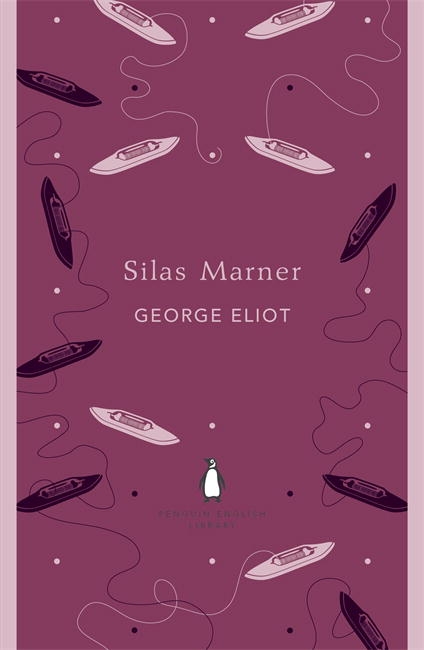
by George Eliot
Wrongly accused of theft and exiled from a religious community many years before, the embittered weaver Silas Marner lives alone in Raveloe, living only for work and his precious hoard of money. But when his money is stolen and an orphaned child finds her way into his house, Silas is given the chance to transform his life. His fate, and that of the little girl he adopts, is entwined with Godfrey Cass, son of the village Squire, who, like Silas, is trapped by his past. Silas Marner, George Eliot's favourite of her novels, combines humour, rich symbolism and pointed social criticism to create an unsentimental but affectionate portrait of rural life.
What are some of your favourite classics?
J.