Showing posts with label victorian literature. Show all posts

Thursday, 21 September 2017

#Victober TBR!

Ange @ Beyond the Pages, Katie @ Books and Things, Kate @ Kate Howe and Lucy @ Lucy the Reader are back for the second year in a row with #Victober - a read-a-thon focused on British and Irish literature written during the reign of Queen Victoria from 1837-1901.

Victorian literature was always my favourite era of literature to study when I was a student, I studied Victorian Popular Fiction and Victorian Gothic in the final year of my undergraduate degree and loved it, but I don't read much of it now that I'm no longer a student. There are so many more contemporary writers, particularly non-British, LGBT+ and poc writers, whom I'd rather devote my reading time to.

Having said that, I do still enjoy classics when I pick them up so I thought I'd join in and try to read a bit of Victorian literature this October alongside all of the other books I want to read this autumn!

There are five challenges:
  • Read a Victorian book by a Irish, Scottish or Welsh author
  • Read a Victorian book that was recommended to you 
  • Read a supernatural Victorian book
  • Read a lesser known Victorian book
  • Read a Victorian book by a female author
I'm only going to attempt three of them, because I don't want Victorian literature to completely take over my reading month, so the challenges I've crossed through are the ones I won't be tackling.


Read a Victorian book by an Irish, Scottish or Welsh author // I'm going to re-read The Great God Pan by Arthur Machen, because I think I need to read it again to appreciate it. It's described as one of the best horror stories ever written but I remember being left a bit disappointed with it, so I'd like to give it another try. Arthur Machen was a Welsh author who focused on supernatural/horror stories, so he's worth checking out if you're into Victorian Gothic.

Read a supernatural Victorian book // Another re-read, this time of one of my favourite pieces of Victorian literature: Carmilla. Carmilla is a vampire story that pre-dates Dracula and I really, really enjoyed it when I had to study it for university. It'd be nice to read it again just for the pure enjoyment of it.

Read a Victorian book by a female author // I love Anne Brontë, but I've never read her masterpiece the whole way through. I've read bits of it here and there and I understand the social importance of it, but I want to read it properly so I can appreciate the often forgotten Brontë's genius. The Tenant of Wildfell Hall is the book I'd like to focus my attention on for this read-a-thon.

Are you taking part in #Victober? What are some of your favourite Victorian novels?

Thursday, 8 October 2015

Review | The Poor Clare by Elizabeth Gaskell


by Elizabeth Gaskell

My Rating: 

A departure from the stories Elizabeth Gaskell wrote for Charles Dickens’s Household Words magazine, The Poor Clare is a dark, gothic novella of thwarted love and a family curse that vividly illustrates the social tensions of Victorian England.

The purposeful slaying of lonely Bridget’s beloved dog unleashes a torrent of rage that surges down through the generations. In her desire for revenge, Bridget utters a fearsome curse upon the dog’s killer: All that the murderer loves most, he will lose.

This haunting story of “the sins of the father being visited upon the children” brilliantly shows off Gaskell’s pioneering understanding of the tensions between Catholics and Protestants, and the harsh realities of class society. The Poor Clare stands as an innovative and exciting gem in Elizabeth Gaskell’s oeuvre.

I'm dedicating my October to spooky reads, and my first read of the month was this novella - one of many classic novellas published by Melville House - which returned me to my literary love: Victorian Gothic.

When it comes to the classics, Victorian Literature is where my heart lies; I took modules in Victorian Gothic and Victorian Popular Fiction at university and loved them both, so I've come across Elizabeth Gaskell before. She's probably most famous for North and South, and for being a life-long friend of the Brontës, but she also wrote quite a few spooky tales, too. I read her short story 'The Old Nurse's Story' while studying ghosts for my Victorian Gothic module, and if you've yet to read anything by Gaskell, or you're a little intimidated by 19th century literature, I recommend starting with a story like that one!

The Poor Clare is a little story of religion, violence, witchcraft and a family curse. Basically, it's no less than what you'd expect from Victorian Gothic! Our narrator falls in love with a young woman named Lucy, who, naturally, is beautiful and pure, but is also plagued by something her only companion, Mrs. Clarke, daren't speak of. Determined to marry her, he sets out to free her from whatever it is that has befallen her.

It's a fun novella, and very easy to read, and though I guessed a lot of the connections that cropped up between the various characters I was still impressed with the way Gaskell weaved her characters' stories together into one overarching plot. There were even some sections that gave me the heebie jeebies; little sentences that alluded to Gaskell's potential as a Gothic writer. The main problem I had with it was that I felt as though it could have been longer. The Poor Clare is very much a 'tell, don't show' kind of story, which isn't uncommon in Victorian Literature, but there were some sections of the plot that were breezed over in such a hurry it surprised me, and I thought there was room there for Gaskell to expand and write a fully-fledged Gothic novel, rather than a novella.

I didn't dislike it, though, and I'd say this is another great starting point for anyone dipping their toes into Victorian Gothic fiction. I look forward to reading more spooky stories throughout the month!

Thursday, 16 April 2015

The Classics Book Tag!

I saw this tag over at It's a Books World and I had to have a go at it myself. I don't read as many classics now that I've left uni, but I still love them dearly.


An Overhyped Classic You Really Didn't Like


Everyone's going to hate me, but I despise The Great Gatsby. Before anyone says anything, I understand why it is the way it is - I get what it's saying - but I still hate it. I don't think it helps that I don't think F. Scott Fitzgerald was a particularly great guy, either. I know we should try to separate the art from the artist, but it's something I often struggle with.


Favourite Time Period to Read About

I'm a Victorian girl, I've always loved the 19th century. So much happened in the 19th century - from the rise of the New Woman to the Gothic to the publication of Darwin's On the Origin of Species - and it informed the literature of the time in a fascinating way.


Favourite Fairy Tale


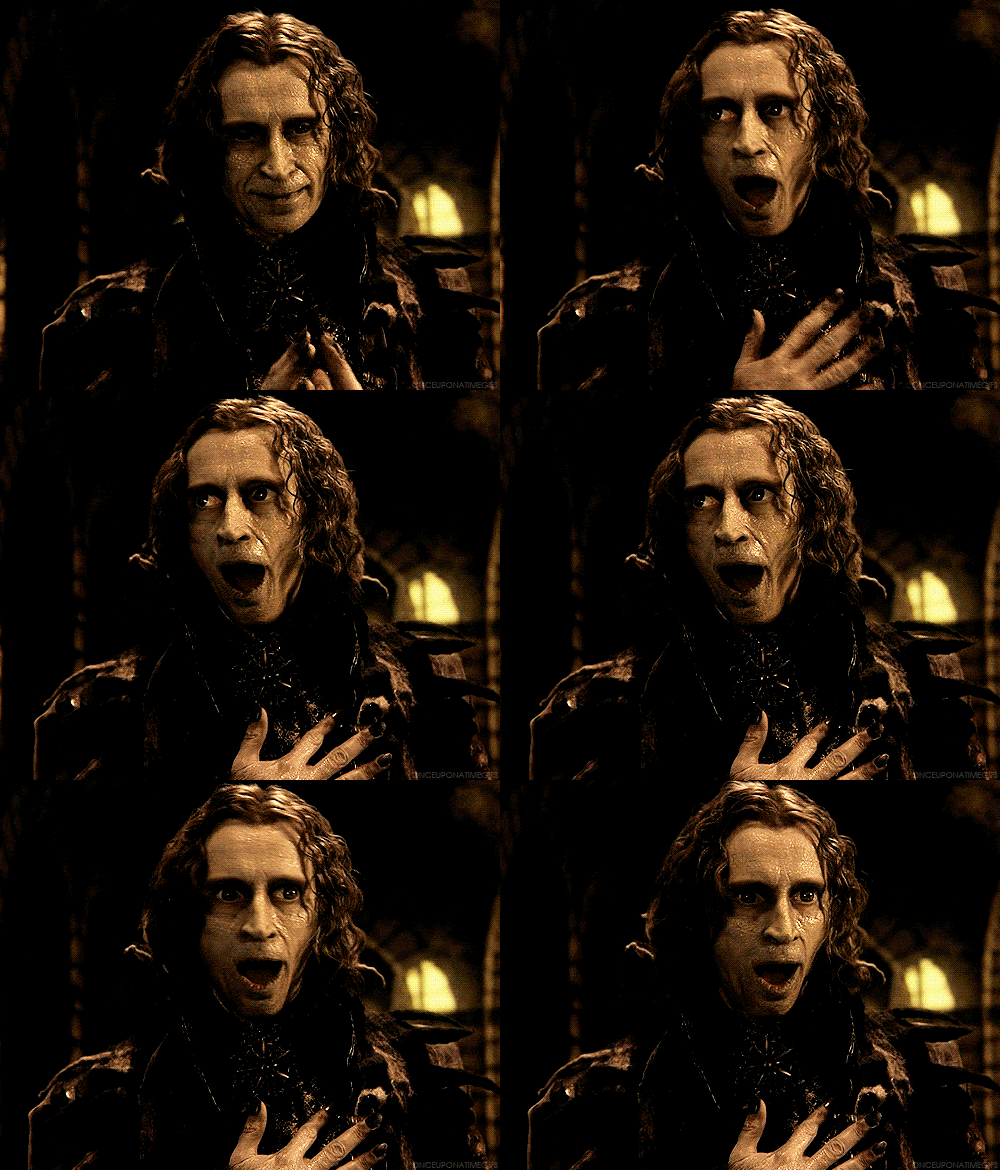
Oh Once Upon A Time, you had so much potential...
I always loved Rumpelstiltskin when I was little. I'm still waiting for my creepy Disney version. Or maybe even an adaptation by someone like Guillermo del Toro, that'd be cool.


Most Embarrassing Unread Classic


I don't really agree with this in the sense that I don't think we should be made to feel ashamed for having not read something, but if there's one classic I feel like I should have read by now it's Harper Lee's To Kill a Mockingbird. I'm sure I'll get around to it one day, but the more people tell me to read it the less I want to.

Top 5 Classics You'd Like to Read Soon


As I'm starting to get into sci-fi I want to read a bit of classic sci-fi, and I love the sound of The Chrysalids. The Tenant of Wildfell Hall I've read parts of before, but I've never been able to sit down and read it from beginning to end which, as a big fan of Anne Brontë, is something I need to do. So far Jane Eyre is the only novel of Charlotte Brontë's I've read, and I have this lovely edition of Villette waiting patiently for me on my shelves, and while I'm not Thomas Hardy's biggest fan I do like the look of the new film adaptation of Far from the Madding Crowd, so I'd like to try reading it this year. I still need to get my hands on a decent copy of The Mabinogion, which are a collection of Welsh legends and folktales!

Favourite Modern Book/Series Based on a Classic


I think most of you know by now how much I love The Lunar Chronicles; they're by far the best retellings I've read.

Favourite Classic Adaptation


I love the 1994 adaptation of Little Women, but I think I have to say the 1993 adaptation of The Secret Garden just because I grew up with it and watched it so often during my childhood.

Least Favourite Classic Adaptation


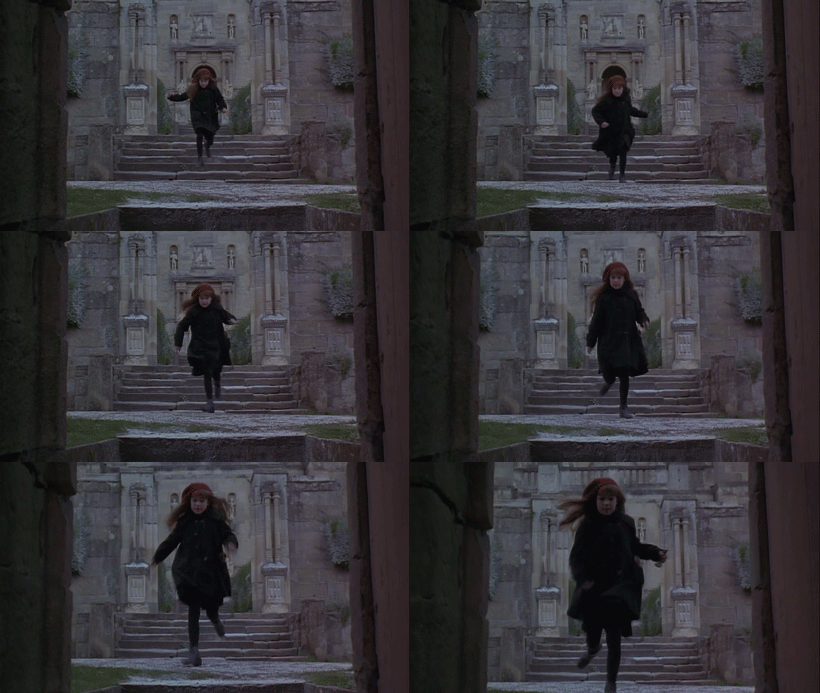
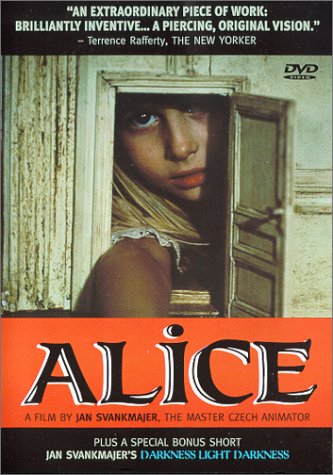
Alice, a 1988 adaptation of Alice's Adventures in Wonderland. I had to watch it for my Lit and Film course at uni and it's horrifying.

Favourite Editions of Classics You'd Like to Collect More Of


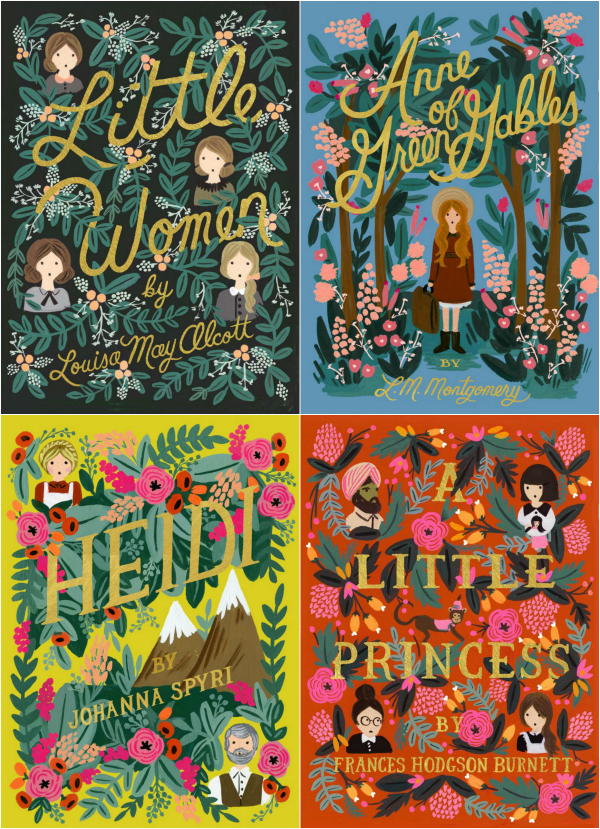
I'd really like Puffin to release more Puffin in Bloom titles. I'd love a pretty edition of The Secret Garden to match the lovely edition of A Little Princess they did!

An Underhyped Classic You'd Recommend to Everyone


Just Anne Brontë in general, really. She's forgotten too often, and I won't stop talking about her until she's as well known as her sisters.

I tag:

Monday, 6 April 2015

E is for Eliot | Blogging from A to Z

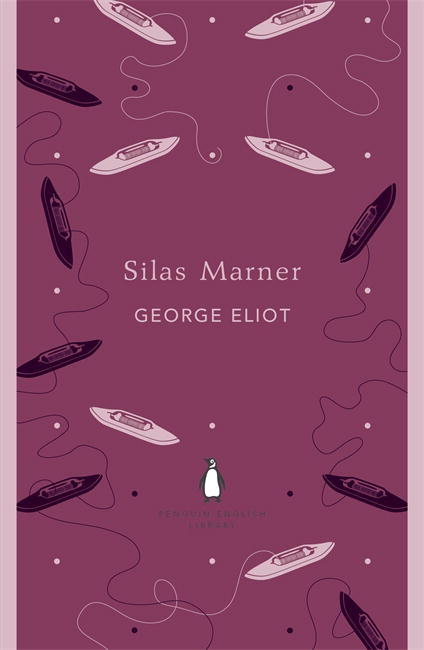
Silas Marner
by George Eliot

Like Agnes Grey, which I talked about for Letter B, Silas Marner is another one of those divisive classics; there are people out there who think it's horrendously boring, and then there are people like me who think it's a beautiful and underrated story.

When you say George Eliot's name the first story to pop into your head might be Middlemarch or Daniel Deronda, but Silas Marner is always the story I think of after first being introduced to Eliot through it during my A Level English Literature course. What I love most about this classic is the sense of people getting what they deserve, even if it's not in the way you first expect it. It's something I try to emulate in my own writing, though I doubt I do it quite as skilfully as Eliot.

This is the book which made me realise that when it comes to classics it's the literature from the 19th century I most enjoy. I love the themes - from the rise of the new woman, to imperialism, to the Gothic - and I enjoy the rich character studies so many 19th century classics contain.

If you're new to 19th century literature and you find dense books intimidating, something like Silas Marner might be a great starting place for you!

Thursday, 2 April 2015

B is for Brontë | Blogging from A to Z

Agnes Grey
by Anne Brontë

I wonder how many of you were expecting to see Jane Eyre or Wuthering Heights when you saw the name Brontë. Don't get me wrong, Charlotte and Emily are literary geniuses in their own right - although nothing is ever going to make me see Heathcliff as a romantic hero - but the youngest Brontë, Anne, is forgotten far too often.

Unlike her sisters, who drew upon elements of the Gothic for their work, Anne was much more interested in society and, in particular, society's attitudes towards women in the 19th century.

Agnes Grey follows the titular character who decides to become a governess in order to support her family when they suddenly find themselves destitute. Much like Jane Eyre, Agnes Grey explores the role of the governess in 19th century society and how these women were treated by their employers and the other people around them, but Anne expands this to look at how women of all classes are treated poorly through Agnes's relationship with Rosalie Murray.

It's not a book for everyone; it's quiet and subtle in its message, but it's a pure joy to read, as well as being one of the only Brontë novels to include a love interest who isn't as problematic as Heathcliff and Mr. Rochester are...

Friday, 13 June 2014

Classics and Contemporaries!

I love a good classic, but I'd be a big, fat liar if I said I wasn't intimidated by some of them. Les Misérables is so big that just the thought of reading it makes me break out into a cold sweat, and Thomas Hardy sends me to sleep, but there are some fantastic stories out there that don't get read because some readers are wary of classics.

If you're one such reader, I don't blame you! If you're introduced to classics in the wrong way you can hate them forever - I, for example, cannot bring myself to enjoy The Great Gatsby because I had to study it in school - but I want to share my love of classics with you and show you another way of getting into them without diving into the deep end!

How? Simple! I'm currently working on five posts in which I have compiled a collection of modern day fiction alongside a collection of classics. Despite being written perhaps hundreds of years apart in some cases, these novels include much of the same themes, characters and/or settings; my hope is that if the modern read interests you, perhaps the classic will, too!

In each post I'll be talking about two classics and their contemporary recommendations. I've divided them all into themes: Romance; Social Commentary; Children's Fiction; Gothic and Science Fiction. These themes mainly apply to the classics rather than the contemporary pieces, but like I said there are still a lot of similarities between them. I've tried to be as diverse as possible with my picks, but the majority of my classics are pieces of Victorian Literature, purely because it's my favourite there are so many different strands of it.

So if this sounds like fun - I hope it does! - look out for the first post, where I'll be talking about Romance, next month! From there, I'll post a different one each month until the end of the year.

See you then!

J.

Friday, 17 January 2014

TBR | Classics

I love a good classic - who doesn't? - and while there are quite a few I've already read there are so many more that I still haven't read yet, so I thought I'd share them with you!

I don't know if I'm going to read these classics in 2014, it'd be nice if I did but I'm not going to put any pressure on myself to read things I'm not in the mood to read. I think that's why I had so many slumps in 2013 - all I could think about was the challenge to read 50 books that I'd set myself. I'm very proud I completed that challenge but I won't be setting myself another one this year just because reading became a chore rather than something I enjoyed.

So, here's the list of classics that I own which I still haven't read. I'd like to try and read them this year!


by Alexandre Dumas

Imprisoned for a crime he didn’t commit, Edmond Dantès spends 14 bitter years in a dungeon. When his daring escape plan works he uses all he has learned during his incarceration to mastermind an elaborate plan of revenge that will bring punishment to those he holds responsible for his fate. No longer the naïve sailor who disappeared into the dark fortress all those years ago, he reinvents himself as the charming, mysterious, and powerful Count of Monte Cristo.

The Count of Monte Cristo is the one book on this list that I have actually started, though I think I've only read the first two chapters so far, which is barely any of the book at all.

I certainly should have read this book already, given that I'm fairly sure I've owned my copy for about six years. Oops! I think the main reason I haven't started it until now is just because I've always found its size intimidating. The story sounds amazing - I love a revenge story - and I think there's a very good chance it could become one of my favourite books once I'm done with it, I just need to get through it all first.

More than any other books on this list, I'm determined to read this one this year!


by Charlotte Brontë

With neither friends nor family, Lucy Snowe sets sail from England to find employment in a girls' boarding school in the small town of Villette.

There she struggles to retain her self- possession in the face of unruly pupils, an initially suspicious headmaster and her own complex feelings, first for the school's English doctor and then for the dictatorial professor Paul Emmanuel. Drawing on her own deeply unhappy experiences as a governess in Brussels, Charlotte Brontë's last and most autobiographical novel is a powerfully moving study of isolation and the pain of unrequited love, narrated by a heroine determined to preserve an independent spirit in the face of adverse circumstances.


As much as I love the Brontës the only novel written by Charlotte that I've read so far is Jane Eyre, it being the most well known of her works. I've heard great things about all of her novels, though, and I bought myself this copy of Villette last year purely because I thought the cover was really pretty.

Villette was Charlotte's final novel and the story sounds pretty interesting, so I'm hoping I'll get around to reading it this year!


by Bram Stoker

A young lawyer on an assignment finds himself imprisoned in a Transylvanian castle by his mysterious host. Back at home his fiancée and friends are menaced by a malevolent force which seems intent on imposing suffering and destruction. Can the devil really have arrived on England’s shores? And what is it that he hungers for so desperately?

Considering I had to study this novel for the final two weeks of my Victorian Gothic module I really should have read it by now. Though I feel I should receive some credit for managing to discuss a novel I hadn't read in class...

I've tried to read this book several times, but each time I've tried I just haven't been able to get into it and I'm not entirely sure why. It was written in Whitby, though, a town very close to where I grew up, and I'd love to finally be able to say that I've read it.

I can't see myself reading it any time soon - unless the Dracula show I've recorded puts me in the mood - but I may save it for Halloween 2014 and read it then!


by Jane Austen

'I never have been in love; it is not my way, or my nature; and I do not think I ever shall.'

Beautiful, clever, rich - and single - Emma Woodhouse is perfectly content with her life and sees no need for either love or marriage. Nothing, however, delights her more than interfering in the romantic lives of others. But when she ignores the warnings of her good friend Mr Knightley and attempts to arrange a suitable match for her protegee Harriet Smith, her carefully laid plans soon unravel and have consequences that she never expected.


I'm going to tell you a secret: I don't like Jane Austen's novels.

The stories themselves are entertaining enough to watch adaptations of, but I just can't get away with Austen's writing style. People are always trying to tell me how funny and witty she is, and while sometimes I can see it there are other times where I want to gouge my eyes out with a spoon.

I think one of the biggest reasons I dislike her novels is that the first Austen novel I read was Persuasion, which I had to read for school when I was seventeen. I absolutely hated it. Mainly because of the heroine; I finished that novel feeling as though she had learned nothing, and I hate it when a book makes me feel like that.

Since then I've had to read Pride and Prejudice, Sense and Sensibility and Northanger Abbey all for university and I just didn't enjoy her writing style. 

So why do I want to try and read Emma? Well I can't judge it until I've at least tried it, and it seems a shame that it's sitting unread on my shelf. I should also point out that I bought my copy of Emma before I read Persuasion, so I had no idea I was going to dislike Austen's writing then.

If I'm in the mood perhaps I'll give Emma a try this year!


by George Eliot

Dorothea Brooke can find no acceptable outlet for her talents or energy and few who share her ideals. As an upper middle-class woman in Victorian England she can't learn Greek or Latin simply for herself; she certainly can't become an architect or have a career; and thus, Dorothea finds herself "Saint Theresa of nothing." Believing she will be happy and fulfilled as "the lampholder" for his great scholarly work, she marries the self-centered intellectual Casaubon, twenty-seven years her senior. Dorothea is not the only character caught by the expectations of British society in this huge, sprawling book. Middlemarch stands above its large and varied fictional community, picking up and examining characters like a jeweler observing stones. There is Lydgate, a struggling young doctor in love with the beautiful but unsuitable Rosamond Vincy; Rosamond's gambling brother Fred and his love, the plain-speaking Mary Garth; Will Ladislaw, Casaubon's attractive cousin, and the ever-curious Mrs. Cadwallader. The characters mingle and interact, bowing and turning in an intricate dance of social expectations and desires. Through them George Eliot creates a full, textured picture of life in provincial nineteenth-century England.


George Eliot was another author I was introduced to in school, and, unlike Jane Austen, my introduction to her was much sweeter.

So far all I've read of Eliot's is the novella Silas Marner, a classic which I love. Unlike Persuasion, the characters in Silas Marner all get their just deserts and I love to see that happen in a story because it rarely happens in real life!

During the second year of my A Levels I studied the theme of 'love through the ages'. We looked at extracts of prose, plays and poetry from Renaissance to Contemporary literature, and this included a few extracts from Middlemarch. The extract I remember reading most vividly involved poor Dorothea thinking of how disappointing her marriage had turned out to be.

Since then it's been on my to-read list, and I might just get around to it in 2014.


by Charles Dickens

It was the best of times, it was the worst of times... These well-known and loved lines begin Dickens's most exciting novel, set during the bloodiest moments of the French Revolution. When former aristocrat Charles Darnay learns that an old family servant needs his help, he abandons his safe haven in England and returns to Paris. But once there, the Revolutionary authorities arrest him not for anything he has done, but for his rich family's crimes. Also in danger: his wife, Lucie, their young daughter, and her aged father, who have followed him across the Channel. 


I have to admit I haven't actually read much Dickens at all. I read Oliver Twist when I was a child after my parents bought me a beautiful, illustrated version. Since then I haven't gone back to it, however, because Nancy's death terrified me when I was little.

I've also read A Christmas Carol - the Christmas story - and I love it! I think it's also one of Dickens' more enjoyable stories purely because it's more of a novella than a novel, and therefore isn't as intimidating.

Other than that, though, I've only watched adaptations. I'd never been particularly interested in reading A Tale of Two Cities before last year - I always found the 'It was the best of times, it was the worst of times' quote rather irritating - but recently I've been developing more of an interest in French literature and French history. I had no real idea what A Tale of Two Cities was about, so when I discovered it was set during the time of the French Revolution I bought a copy!


by Victor Hugo

In the vaulted Gothic towers of Notre-Dame lives Quasimodo, the hunchbacked bellringer. Mocked and shunned for his appearance, he is pitied only by Esmerelda, a beautiful gypsy dancer to whom he becomes completely devoted. Esmerelda, however, has also attracted the attention of the sinister archdeacon Claude Frollo, and when she rejects his lecherous approaches, Frollo hatches a plot to destroy her that only Quasimodo can prevent. 


Speaking of the French, here's another French classic!

Like a lot of people out there I'm a huge fan of Disney's version of Hugo's classic tale, but I'm aware that the original source material is much darker. Even though I'm fairly sure the novel doesn't include talking gargoyles or sing-alongs I'd still love to read it, especially considering I've yet to read anything written by Victor Hugo.

I'd love to work my way through Les Misérables at some point, but The Hunchback of Notre Dame is a lot shorter, so I think I'll start with that one first!


by Elizabeth Gaskell

When her father leaves the Church in a crisis of conscience, Margaret Hale is uprooted from her comfortable home in Hampshire to move with her family to the north of England. Initially repulsed by the ugliness of her new surroundings in the industrial town of Milton, Margaret becomes aware of the poverty and suffering of the local mill workers and develops a passionate sense of social justice. This is intensified by her tempestuous relationship with the mill-owner and self-made man, John Thornton, as their fierce opposition over his treatment of his employees masks a deeper attraction. 


Gaskell is yet another author whose works I've barely read. So far the only story of hers I have read is The Old Nurse's Story, a short ghost story which I liked a lot, but I'd love to sink my teeth into one of her novels.

I already know the story behind North and South as I watched the BBC adaptation a couple of years ago, and it only made me want to read the book more. Richard Armitage will forever be my John Thornton; he looked brilliant in a top hat!

Not only that, but I think Margaret Hale will be a literary heroine I can relate to. I know from personal experience what it's like to have to move from one end of the country to another because of my dad's work - in fact I've done it several times.

So with any luck, North and South will be another classic I get through this year!


by Wilkie Collins

"There in the middle of the broad, bright high-road-there, as if it had that moment sprung out of the earth or dropped from the heaven-stood the figure of a solitary woman, dressed from head to foot in white garments."

Thus young Walter Hartright first meets the mysterious woman in white in what soon became one of the most popular novels of the nineteenth century. Secrets, mistaken identities, surprise revelations, amnesia, locked rooms and locked asylums, and an unorthodox villain made this mystery thriller an instant success when it first appeared in 1860, and it has continued to enthrall readers ever since. From the hero's foreboding before his arrival at Limmeridge House to the nefarious plot concerning the beautiful Laura, the breathtaking tension of Collin's narrative created a new literary genre of suspense fiction, which profoundly shaped the course of English popular writing. 


I read The Moonstone for a module in Victorian Popular Fiction back in 2012 and it quickly became not only one of my favourite classics, but one of my favourite books of all time. Ever since then I've been dying to read something else by Wilkie Collins, and I believe The Woman in White is his most famous work.

Like The Count of Monte Cristo, however, I've always found its size kind of intimidating - it's a pretty big book! Even so I'd like to try and read The Woman in White this year if I can!

If you read all of that I applaud you! This turned out to be a longer post than I'd expected...

Are there any classics you'd like to cross off your list in 2014?