Monday, 4 July 2016

Review | Vinegar Girl by Anne Tyler


by Anne Tyler

My Rating: 


Kate Battista is feeling stuck. How did she end up running house and home for her eccentric scientist father and uppity, pretty younger sister Bunny? Plus, she’s always in trouble at work – her pre-school charges adore her, but the adults don’t always appreciate her unusual opinions and forthright manner. 

Dr Battista has other problems. After years out in the academic wilderness, he is on the verge of a breakthrough. His research could help millions. There’s only one problem: his brilliant young lab assistant, Pyotr, is about to be deported. And without Pyotr… 

When Dr Battista cooks up an outrageous plan that will enable Pyotr to stay in the country, he’s relying – as usual – on Kate to help him. Kate is furious: this time he’s really asking too much. But will she be able to resist the two men’s touchingly ludicrous campaign to win her round?

Anne Tyler’s retelling of The Taming of the Shrew asks whether a thoroughly modern, independent woman like Kate would ever sacrifice herself for a man. The answer is as individual, off-beat and funny as Kate herself.

I received an eARC of Vinegar Girl from NetGalley in exchange for an honest review.

As the world celebrates 400 years of Shakespeare, it only seemed right that I check out at least one of the books in the Hogarth Shakespeare series this year, and of the ones published so far it was Vinegar Girl that most captured my attention. I was expecting a tongue-in-cheek, clever little rom-com, but what I got was a trainwreck.

One of the reasons Shakespeare is so popular and his work has lasted so long is because it's so universal. His stories include themes and tropes that continue to appear in our stories, and as such his work is constantly being retold and reinterpreted in different cultures, countries and times. Of all his plays, I'd say The Taming of the Shrew is one of the more difficult stories to adapt, particularly into a modern day setting. The idea of 'taming' a woman - of selling her off to the best person you can find in the hopes of finally selling off her prettier, more amenable sister - isn't quite the kind of story modern audiences, particularly modern female audiences, are interested in reading.

So when Anne Tyler took on this challenge for Hogarth Shakespeare she certainly had her work cut out for her, and I wasn't sure how anyone could make this story work, but the idea sounded great. A scientist wants his headstrong daughter to marry his assistant before his visa expires so he can stay in the country and help her father with his research. Brilliant! That's such an imaginative twist on an outdated story.

Unfortunately, the idea turned out to be far better than the execution of it.

Firstly, Tyler's Kate just isn't Kate to me. At first she had promise. I was surprised to discover that the Kate in Tyler's retelling would be a teaching assistant but somehow it worked; she's stuck looking after other people's kids and while she might not be the best at the job the kids like her, and it's easy to see why. Tyler's Kate is a bit lost. She's a college dropout who has no idea what she wants to do and that indecisiveness has left her keeping house and home for her younger sister and her frustrating father. This would have worked so much better if Kate had a bit of gumption. Instead she lets her father walk all over her, and while she's rightly angry and upset when he broaches the subject of her marrying his assistant so he can stay in the country, the Kate I know would have had a lot more to say before she ran up to her room and wept.

Not only that, but she actually agrees to the marriage about 40% of the way through the book. Gee, that shrew sure wasn't hard to tame. I suppose that's not really fair, as Kate mainly agrees to it because, once again, her horrible, useless, selfish father guilts her into it. Her 'love interest' Pyotr isn't much better. When I first read the synopsis of Vinegar Girl I assumed that her father's assistant would also be unaware of his boss's plan, but he was all for it! It didn't seem to bother him at all that this woman was sacrificing an awful lot to help him out, not that Kate's particularly endearing either; she seemed to have a few thoughts regarding foreigners and immigrants that just made me feel a bit uncomfortable given our current political climate.

Kate doesn't have to be nice - one of the joys of her as a character is that she's past the point of niceness, she just wants to be left alone - but you have to be careful with what she isn't nice about. Kate does an awful lot of cooking in this book and appears to even be quite good at it, so why couldn't she burn the food? In fact if she's a good cook all the better, because then we know she's burned the food out of spite rather than incompetence. When the few times Kate is genuinely unpleasant have to do with immigrants it doesn't make her a sympathetic character, and considering her father is trying to get her to marry some guy she doesn't know because it'll help him out she should be a sympathetic character.

The only member of the family who seems to have any sense is Kate's younger sister, Bunny, which is ironic really considering how often Kate and her father think of her as a nitwit. In fact Bunny felt more like the original Kate than Kate did.

Once Kate's engaged she starts to think of this sham marriage as a chance for her to start afresh. Maybe she can go back to college and become a botanist - oh yeah Kate wants to be a botanist; it's mentioned, like, twice so clearly it's such a huge part of her life #not - but she only considers that after Pyotr suggests it. I know Kate's indecisive, but is she so indecisive that she needs this man she barely knows who she's being forced to marry to consider that possibility for her? That's not Kate! At one point Pyotr even says he's going to call her Katja - instead of, oh I don't know, her actual name - and Kate's response is to shrug it off and let him. That's. Not. KATE!

In fact their whole 'relationship' makes no sense. Kate has her own job, she has her own income, and she never goes anywhere - the poor woman has no friends - so she must have some money saved. Why doesn't she just leave her horrible father's house? She could take Bunny with her, report her father to the police and go back to college part time. Clearly Vinegar Girl wouldn't be a retelling if that happened, but you can't ignore massive plot holes for the sake of a retelling - you just have to write a better retelling. Besides given what Tyler's done to Kate she doesn't seem to be that bothered about writing a true retelling anyway, because the Kate I know would never let things get like this.

Then, right at the end of the book, Kate makes a sudden speech about how modern life is hard for men because they're not allowed to be emotional. If you think this review just took a sudden turn, then you'll feel an inkling of the confusion I felt when this sudden 'theme' appeared out of nowhere. Now as far as I'm concerned feminism is just another word for equality, and feminism works in favour of men just as much as women; men shouldn't have to feel like they need to be macho all the time, they shouldn't be ashamed to cry, but there was no place for that argument here. It was tacked on the end so badly that for a moment I thought I was reading the end of another book.

I don't know how, but somehow Tyler managed to write a 21st century version of The Taming of the Shrew that's somehow less feminist than the original 16th century version. There was promise with this idea, but the execution was poor and the whole story's just a mess. If you want a good retelling of The Taming of the Shrew, just watch 10 Things I Hate About You instead.

Friday, 1 July 2016

Review | Soulless by Gail Carriger


by Gail Carriger

My Rating: 

Alexia Tarabotti is laboring under a great many social tribulations. 

First, she has no soul. Second, she's a spinster whose father is both Italian and dead. Third, she was rudely attacked by a vampire, breaking all standards of social etiquette.

Where to go from there? From bad to worse apparently, for Alexia accidentally kills the vampire--and then the appalling Lord Maccon (loud, messy, gorgeous, and werewolf) is sent by Queen Victoria to investigate.

With unexpected vampires appearing and expected vampires disappearing, everyone seems to believe Alexia responsible. Can she figure out what is actually happening to London's high society? Will her soulless ability to negate supernatural powers prove useful or just plain embarrassing? Finally, who is the real enemy, and do they have treacle tart?

Gail Carriger's one of those authors who's been on my TBR for quite a few years now. I've read very few fantasy of manners books, but considering I love historical fiction, and particularly subgenres such as historical fantasy and historical magical realism, I'd certainly like to read more of them, especially now having read Soulless.

Soulless is set in an alternate Victorian London where vampires, werewolves and ghosts are known and integrated into society. Vampires keep to their hives and werewolves to their packs, and there are certain rules in place to ensure that everyone lives together as harmoniously as they possibly can given the circumstances. Our protagonist, Alexia Tarabotti, is a spinster who only really attends parties for the food (I'm the same, to be honest) and also happens to have no soul. This isn't exactly common, in fact it's so rare even her own family don't know about it, but in this world she can use it to her advantage, for if she touches someone supernatural they revert to a human state for however long she happens to be touching them, making it practically impossible for supernatural creatures to attack her. And even when they try she has her trusty parasol to bat them off with.

Friends with a flamboyant vampire and frustrated with a particularly handsome werewolf, Alexia is no stranger to the supernatural. At the beginning of Soulless she's attacked by a vampire who, oddly, doesn't appear to know what she is; those born without souls used to hunt vampires, and so any new vampires are warned of their existence. Throughout the country werewolves and vampires are going missing, and when an eerie figure with a horrid grin begins pursuing Alexia she realises whoever's taking the supernatural creatures is after her too, and she's determined to find out why.

From the beginning Soulless is fun and fast-paced. It's not exactly heavy on the action, as a fantasy of manners book much of the conflict is conveyed through witty dialogue and social encounters rather than fist fights or shoot outs in the middle of the street, but I was never bored. In fact I flew through this, and would have finished it much faster than I did if I hadn't left it at work over the weekend. That was frustrating.

Alexia's a very entertaining heroine. Historical fiction is full of women, usually spinsters, who are 'ahead of their time' to the point where they can become interchangeable, but in a way it's almost as though Carriger is aware that Alexia is something of a trope, and because of that self-awareness it works. She's also not the usual spinster who's declared the 19th century equivalent of 'I don't need no man', but a woman who's lucky enough to come from a fairly wealthy family which means she doesn't need to get married to advance her family's position in society or bring in extra money. She's comfortable as she is, so she stays as she is.

Then we have Lord Conall Maccon, the Scottish werewolf who plays the part of our love interest in this book. I have to be honest, I liked him a lot. Call me shallow but I have a thing for older men in fiction, particularly of the gruff variety. Moody and self-pitying I don't like, but a man who knows how to take control while also showing women respect? Yes. Yes please.

The book is populated by a colourful cast of other characters, from Alexia's Mrs. Bennet-esque mother to her loyal butler Floote, and altogether they're such fun to read. That's the best word I can think of to describe this book: fun.

Soulless isn't to be taken too seriously. Amidst all the flirting and tea there are moments where Carriger uses the supernatural as a way to comment on society, on the way we treat people we view as 'other', and while it's nothing ground-breakingly new I still appreciated it being there, but if you're looking for a serious historical fantasy I don't think Soulless is what you're looking for. At times it borders on the silly - particularly during the times when the romance overtakes the plot - but it's harmless and, there's that word again, fun.

I'm really looking forward to reading the rest of this series, and checking out more of Carriger's work.

Wednesday, 29 June 2016

This Week in Books | 29/06/16


This week I'm joining in with Lipsy @ Lipsyy Lost & Found to talk about the books I've been reading recently!


Now: I'm slowly getting back into the reading zone. I managed to read three books last week, which is the most I've read in a week in a long while, and it feels wonderful to be enjoying stories again. I've been trying to get ahead on my eARCs - in fact two of the books I finished last week were NetGalley reads - and now I'd like to challenge myself to finish the books which I've listed as 'Currently Reading' on Goodreads before I pick up anything new. Now considering I'm coming out of the biggest reading slump I've ever had I'm not going to be too strict with myself - if something calls to me, I'm going to read it - but I know I'd really feel like I've accomplished something if I get those books under my belt. One of those books just happens to be Longbow Girl, and I think it's going to be a lot of fun. I'm trying to read more books which feature time travel, and considering I currently live in Wales I haven't read much set in Wales.

Then: Over the weekend I crossed two eARCs off my TBR: Silvia Moreno-Garcia's Certain Dark Things, which I loved, and Anne Tyler's Vinegar Girl, which I didn't. Right now my blog pretty much consists solely of book reviews as I'm catching up on my reading and reviewing, so look out for my review of Vinegar Girl next week to find out why I didn't like it!

Next: Continuing with the theme of finishing books I've started, I'd like to cross The Geek Feminist Revolution off my TBR. I've enjoyed the little I've read so far and heard amazing things about the rest of it, so I'm hoping to really love this one - plus I'd like to read more 2016 releases in 2016!

What are you reading this week?

Tuesday, 28 June 2016

Top Ten Tuesday | My Summer TBR


Top Ten Tuesday is a weekly feature created at The Broke and the Bookish. Each week you compile a list of ten books which coincide with that week's theme. You can find everything you need to know about joining in here!


This week's theme is a freebie, so I'm going to share my summer TBR with you!


The Summer Before the War by Helen Simonson: I received an eARC of this book from NetGalley which I still haven't read because I've been saving it for the summer months - I think it sounds lovely.

Summer Days & Summer Nights ed. by Stephanie Perkins: I really enjoyed My True Love Gave to Me, so I'm looking forward to diving into this summery anthology!

Diving Belles by Lucy Wood: My family and I are off to Cornwall in the last week of July. and I'm planning to take Diving Belles with me; this is a short story collection in which all of the stories have been inspired by Cornish folklore, making it the perfect book to take on holiday with me!

The Muse by Jessie Burton: I loved The Miniaturist so, naturally, I can't wait to get my hands on a copy of Burton's second novel at the end of this month.

Beauty Queens by Libba Bray: I'm pretty sure Beauty Queens was on my summer TBR last year too, but I still haven't got around to reading it - it sounds like a great read for the summer, and I'm looking forward to some tongue-in-cheek, feminist fun!


The Parasol Protectorate series by Gail Carriger: I finally read Soulless this month and had so much fun with it that I'm planning to read the rest of the series, and I'd love to get all of the books under my belt over the summer.

Jane Eyre by Charlotte Brontë: As it's Charlotte Brontë's bicentenary this year, it only seems right to re-read her most famous novel. I love Jane Eyre but it's been quite a while since I read it, so I'd love to read it again this summer.

Which books made your list this week?

Monday, 27 June 2016

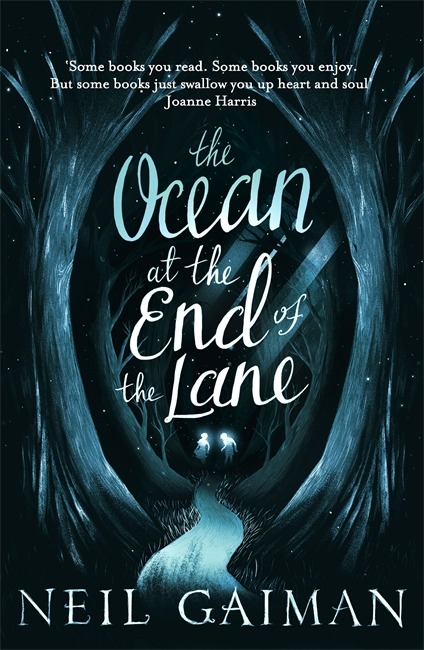
Review | The Ocean at the End of the Lane by Neil Gaiman


by Neil Gaiman

My Rating: 

This is what he remembers, as he sits by the ocean at the end of the lane:

A dead man on the back seat of the car, and warm milk at the farmhouse; An ancient little girl, and an old woman who saw the moon being made; A beautiful housekeeper with a monstrous smile; And dark forces woken that were best left undisturbed.

They are memories hard to believe, waiting at the edges of things. The recollections of a man who thought he was lost but is now, perhaps, remembering a time when he was saved...

I've heard nothing but praise for The Ocean at the End of the Lane since its publication, but while I love Neil Gaiman's work I didn't get around to reading his latest novel until this year. I have to be in the right kind of mood for Gaiman's work, but Natalie @ A Sea Change and I have been taking part in our own version of the Book Buddy-A-Thon and this was the book she chose for me so I was glad of the excuse to cross it off my TBR.

For some reason I always find Gaiman's work difficult to review, but I like to try and review every book I read so here goes nothing!

The Ocean at the End of the Lane follows our nameless narrator as he returns home for his father's funeral and finds himself reminiscing about a peculiar time in his childhood that involved a suicidal lodger, a monster in a beautiful disguise and three witches who lived down the lane.

I've come away from The Ocean at the End of the Lane not quite sure how to feel about it. Like all of Gaiman's work it's beautifully written, so imaginative and wonderfully whimsical; it has a fairy tale quality to it, despite not being a fairy tale, as so much of Gaiman's work does, but having said that it didn't make me feel as much as I'd hoped it would.

I love whimsy. I grew up on fairy tales, Disney movies and classic films like The NeverEnding Story and Labyrinth, but I find some of Gaiman's work more focused on whimsy than substance. I feel like I'm not being fair saying that because I liked The Ocean at the End of the Lane a lot, and parts of it are just beautiful, but I came away from novels like The Graveyard Book and American Gods feeling a lot more and I like to come away feeling something.

Basically what I'm trying to say, not very eloquently, is that The Ocean at the End of the Lane isn't my favourite of Gaiman's novels, but it's still wonderful and I still recommend you check it out. If you've yet to read any Gaiman this would be a brilliant place to start!

Friday, 24 June 2016

The Indecent Minority

Screw you Farage. Today I'm ashamed to be English, and proud to be part of the 'indecent minority' who voted to remain in the EU. 75% of people in my age group voted to remain, so I will have to live with the consequences of the older generation's decision long after they've passed away.

I'm glad to live in a country where I have a right to vote, where we are a democracy, and now that the UK has decided I suppose we'll have to do our best with what we have, but we've lost more money this morning alone than we ever would have 'lost' giving to the EU. Farage has already claimed money once given to the EU will not be going into the NHS, despite many people voting Leave because they thought that's where the money would be going. This is what happens when you put your faith in a man like Nigel Farage.

I'm devastated. I want to be part of the EU - I want to live in a Britain that gives as much as it takes, not a Britain that tries to take as much as it can without giving back. I want to live in a Britain that isn't against immigration, that isn't ruled by racism and xenophobia. There's no such thing as 'Great' Britain, because we were never 'great'. There's no such thing as a United Kingdom, because judging by the way things are likely to go Nigel Farage and Boris Johnson will go down in history as the people who split the UK, and if it does split I'm hoping the Scots won't mind if I go and live with them instead.

Today's a sad, sad day.

Wednesday, 22 June 2016

This Week in Books | 22/06/16


This week I'm joining in with Lipsy @ Lipsyy Lost & Found to talk about the books I've been reading recently!


Now: I was thrilled to receive an eARC of Silvia Moreno-Garcia's new novel, Certain Dark Things, from NetGalley. If you've been following my blog for a while you'll know I adored her debut, Signal to Noise, and with Certain Dark Things not being published until October I'm so excited to have the chance to read it early. I've only read the first few chapters as I wanted to finish another book first, but I'm aiming to read it this week. Look out for my review nearer the publication date!

Then: I've now officially read some Gail Carriger, an author whose work has been on my TBR for a long time, and I really enjoyed Soulless. More than anything it's just a lot of fun; it was an easy, enjoyable read, just what I needed, and I'm looking forward to continuing on with the series. Look out for my review of Soulless next week!

Next: Unfortunately Longbow Girl has fallen to the wayside now that I have Certain Dark Things in my life. I'm really looking forward to carrying on with it, I want to read more time travel books, I just want to read Certain Dark Things first.

What are you reading right now?