Showing posts with label feminism. Show all posts

Friday, 15 January 2016

The 'Boys Will Be Boys' Bullshit

I’m stepping away from books today to talk about something a little more personal, and something that I believe very strongly. 

I saw a quote the other day that got me thinking: ‘be who you needed when you were younger’, and looking back at my school days there are lots of things I wish I’d had the confidence to protest against. I wish someone had been there to tell me that my feelings that something was wrong were valid.

I used to think feminism was a dirty word. I used to think if I didn’t wear makeup I was somehow ‘better’ than the girls that did. As someone white and privileged who grew up in a small, mostly white country town I was very ignorant and I had a lot of internalised misogyny, but there were a lot of things I also fought against vehemently (and thankfully, I've learned a lot since then). Firstly, I hated the idea that because I was a girl I had to set an example in which it was kind to ‘let the boys win’. I wasn’t interested in that. I was a bright child - I knew I was a bright child - so when boys in school tried to tell me their way of incorrectly spelling something was right I wouldn’t back down. I’d even be that annoying child that went to the teacher for confirmation just to prove my point.

I’m still a stickler for spelling now.

I also refused to let boys at my school get away with making fun of the girls as we went through puberty. I developed early; at twelve years old I’d already started my period and begun to develop breasts, while many girls around me remained very slim. I envied their breastless chests. I couldn’t run without someone, sometimes several years my senior, making some sort of comment about my body and I didn’t know how to respond. I was twelve.

Us girls couldn’t win. My classmates who had yet to develop were teased for being ‘flat-chested’, and when I told the boys to sod off I was teased for having breasts. It’s no exaggeration: teenage girls can’t win.

What sticks in my mind most about these boys, however, is how they thought they had the right to touch me without my permission. When I turned fourteen it didn’t stop at teasing or inappropriate comments; I can vividly remember boys in my classes - particularly in classes such as Art and Design & Technology in which we weren’t sitting at desks where our teachers could see us - grabbing my breasts and then running off, giggling all the while. Boys would stroke my legs or pinch my bum, but for the most part it was my chest that fascinated them. I could almost pity them, in hindsight.

Telling them to leave me alone did nothing. If anything they seemed to take more enjoyment in touching me when they knew I didn’t like to be touched. The worst thing is most of these boys have probably grown into young men who either don’t remember touching girls without their permission, or feel no remorse about it if they do. I look back at that time and I wish I could go back and tell my teachers or even my parents. I don’t know what my teachers would have done - it’s no secret that young girls are encouraged not to wear short skirts or shorts for fear of 'distracting the boys', when in reality it’s the boys, and even the grown men, who should learn to stop sexualising girls’ thighs. The sad thing is that mentality doesn’t go away as we get older; the international SlutWalk was bred from a police officer’s statement that if young women don't want to be raped they shouldn't dress 'like sluts'.

In any case they didn’t have that pathetic excuse with me. Like many of my friends I wore trousers to school and I liked to wear shapeless sweaters; the fact that I had breasts made me uncomfortable because they were so often stared at. Basically, our clothes have nothing to do with it.

This idea that it’s our fault is poisonous. I didn’t tell any teachers or my parents about what boys at school did to me because it was happening to everyone; as girls we’re raised to expect this kind of behaviour, and to rise above it by ignoring it. And remember: never encourage it! I never saw any boy punished at school for his behaviour towards any of the girls, so it never occurred to me that he could be punished for it and, hopefully, learn from it.

I wish someone back then had told me that my feelings mattered. That I wasn’t a prude because I didn’t like it, but that my feeling that there had been an injustice - that someone had touched me without my permission and gotten away with it - wasn’t melodramatic or silly. I wish someone had told me my feelings were justified.

Worse things have happened, and are happening, to women all around the world. In the grand scheme of things I’ve been fairly lucky. I wish I could say these instances  didn’t affect me in the slightest, but I’m done with being the bigger person and staying quiet. What they did, whether they meant it maliciously or not, was not okay. It wasn’t okay when it happened to me, and it wasn’t okay when it happened to any of the other girls in my school. It’s not okay when it happens to any girl in any school.

So this is my letter to any young girls out there, whether someone’s touched you without your permission for the first time or the hundredth time: It’s not okay, and your feelings that it’s not okay are valid. Please tell your teacher, talk to your parents or your siblings or anyone you trust. Talk to your friends. Talk to your male friends who might not even realise there’s anything wrong. Don’t be afraid to stand up for yourself and others. Your body is yours, and you are the only person who gets to dictate who touches it.

Monday, 30 November 2015

Review | The Only Woman in the Room by Eileen Pollack


by Eileen Pollack

My Rating: 


In 2005, when Lawrence Summers, then president of Harvard, asked why so few women, even today, achieve tenured positions in the hard sciences, Eileen Pollack set out to find the answer. A successful fiction writer, Pollack had grown up in the 1960s and ’70s dreaming of a career as a theoretical astrophysicist. Denied the chance to take advanced courses in science and math, she nonetheless made her way to Yale. There, despite finding herself far behind the men in her classes, she went on to graduate summa cum laude, with honors, as one of the university’s first two women to earn a bachelor of science degree in physics. And yet, isolated, lacking in confidence, starved for encouragement, she abandoned her ambition to become a physicist.

Years later, spurred by the suggestion that innate differences in scientific and mathematical aptitude might account for the dearth of tenured female faculty at Summer’s institution, Pollack thought back on her own experiences and wondered what, if anything, had changed in the intervening decades.

Based on six years interviewing her former teachers and classmates, as well as dozens of other women who had dropped out before completing their degrees in science or found their careers less rewarding than they had hoped, The Only Woman in the Room is a bracingly honest, no-holds-barred examination of the social, interpersonal, and institutional barriers confronting women—and minorities—in the STEM fields. This frankly personal and informed book reflects on women’s experiences in a way that simple data can’t, documenting not only the more blatant bias of another era but all the subtle disincentives women in the sciences still face.

The Only Woman in the Room shows us the struggles women in the sciences have been hesitant to admit, and provides hope for changing attitudes and behaviors in ways that could bring far more women into fields in which even today they remain seriously underrepresented.

I received an eARC of The Only Woman in the Room from NetGalley in exchange for an honest review.

The first thing I feel like I must say is that I'm not a scientifically-minded person at all. I didn't enjoy science in school, and while science is something I've gotten a little more interested in as I've gotten older I'm still much more of a literature and history person. You might wonder why I requested this book in the first place if that's the case, but just because I'm not very into science myself doesn't mean I'm not aware of the stigma against women in science that still exists. Other than Marie Curie I don't remember learning about any female scientists at school, and there are so many unsung heroines of the science world; Margaret Cavendish; Ada Lovelace; Mary Anning; Barbara McClintock; Rosalind Franklin... You get the point. I already know plenty about women in literature and history who have been overlooked for their white, male counterparts, so I wanted to learn a little more about what it's like for women in the sciences.

This is a hard book to review, because there were some things I really loved and some things... not so much. An important thing to point out is that I think this book is actually quite misleading; both the title and the blurb imply that the entire book follows Eileen Pollack as she talks to women in the sciences, but that only takes up the final third of the book. The first two thirds of the book are Eileen's memoir, following her childhood, her time at university and the time in which she strayed from physics to writing. Personally I didn't mind that, I thought her memoir was really interesting, but I think it's very misleading for anyone coming to this book just for that final section, and it left the book feeling like two smaller books that had been mushed together.

I've become a lot more interested in non-fiction this year, and for the most part this is the kind of non-fiction I like - the majority of the non-fiction books I've read this year have focused on feminism, so I was glad to add this one to my list. As you can see from my rating I enjoyed it, there was a lot that reminded me of myself despite the focus on science, and I think all women could read this and relate to some of Pollack's experiences.

However, I think I could have given this book five stars if it weren't for a few things that just grated on me.

Firstly, I felt as though Pollack had a tendency to perpetuate some of the negative stereotypes that often work against women who want to work in the sciences. More than once she admits to only remembering the professors she had a crush on, and something about that really annoyed me. I think it's only natural for people to develop crushes on their teachers or professors, though I must admit that never happened to me, but Pollack seemed to have an obsession with potential romantic partners. When interviewing some other scientists she often asked them if they were married or in serious relationships, and while I could understand the question's relevance to the idea that a woman can't be a scientist and a wife, it felt as though we'd stepped back fifty years.

Quite often Pollack openly admitted her outright jealousy towards other women in science who had been able to do what she hadn't by working in science, and while I think it's very brave of her to openly admit that jealousy and there's the whole problem of internal misogyny that, as women, we must continue to fight against, it sometimes felt as though Pollack wanted to be the only woman in the room. She wanted to be told she was special, whether she was a scientist or a writer, and as much as I think there's a part of all of us that wants that, I don't think it's fair of Pollack to hold other women's success against them. When women in the sciences are already struggling, there's no room for girl hate.

One other thing that annoyed me quite a bit was Pollack's insinuation that women who decided to pursue the arts instead of the sciences were 'cheating'. Firstly, I think that's very hypocritical coming from a woman who now makes her living as a writer, and secondly, the arts aren't an easy fallback; I didn't pursue English Literature at university because I couldn't make it as an astronaut. I do agree that a lot more women need to be encouraged to pursue the sciences if they enjoy it or they have an aptitude for it, but I didn't like the insinuation that the arts is full of women who'd rather be doing science.

I do think this is worth reading. I know my review seems very negative, but please keep my rating in mind - there was so much in here that spoke to me and I enjoyed reading it, for the most part, I just had a lot of thoughts about the stuff I didn't like so much.

Thursday, 8 January 2015

Seven Deadly Tropes

So Shannon over at It Starts at Midnight posted her Bookish Sins, and they were so much fun that I decided to share some of my own because, when it comes to books, I have quite a few pet peeves!

1) The Brooding/Unhealthy Love Interest

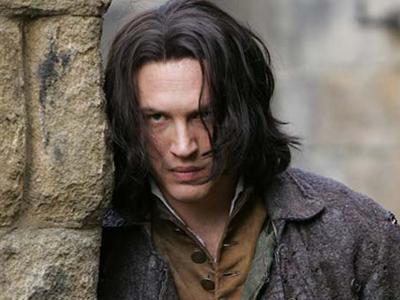
I know I probably sound like your mother, but that boy really is bad news! One of the main reasons I don't tend to read an awful lot of YA is because in my experience it's a genre brimming with these brooding, unsociable, horrible love interests. These are the kind of guys who, if you met them in real life, you'd probably want to stay as far away from as possible, and yet in book form they seem to make everyone swoon. There's nothing romantic about a guy who thinks the world owes him something and spends his days moping about how unfair the universe is, all while managing to look hella cute despite never cracking a smile.

This isn't something that's seen only in YA, of course. It's remarkable the amount of people who romanticise Heathcliff; those of you who have read Wuthering Heights will know there's nothing romantic about the guy at all. He's really quite awful.


Yeah, he totally looks like a guy you should date.

2) "I'm not like other girls!"

UGH. This is something else I often come across in YA: female characters who believe they're better than other women because they don't care about their appearance or because they spend their weekends reading all six of Jane Austen's novels. 

Shockingly women are as diverse as men; a girl can be a black belt in karate who enjoys playing video games and wearing makeup, just as another girl can enjoy shoe shopping and baking while also being a huge fan of the X-Men and Renaissance Literature. The worst thing writers can do - especially women writers - is pit different kinds of women against each other. It's just not cool.

3) The Dead Girl Test

Whenever I dip into crime fiction - which, unless it's historical crime, isn't all that often - there's always something I look for: does it pass the Dead Girl Test?

If you're wondering what the hell I'm talking about just go to the nearest shelf of crime fiction, whether you have an accumulation of it yourself or next time you're in a library or book store, and read a few of the blurbs. The majority of them will be about a police officer trying to catch someone who has been brutally murdering women.

Now that's not the part I have a problem with, but what does bother me is that you can guarantee that at some point there will be a scene in which a woman's body will be discovered and someone will describe how beautiful she is.


Firstly, dead bodies are grim. It doesn't matter if they've started decomposing or not, there's just something horrifying about corpses. No matter how pretty a person might have been when they were alive there is nothing to romanticise about their corpse. (In fact if your first thought upon seeing a dead body is 'hm not bad' then I think alarm bells should start ringing...)

Secondly, what I hate about this trope is that it implies that if the victim were as ugly as sin it wouldn't be as tragic. I know that's not what the author's saying, but I do think there's an element of that there and it really bugs me.

4) You've Got a Friend in Me

Again, this is something I tend to see a lot of in YA: whatever happened to girl/guy friendships? In recent years there have certainly been more, but so often if a boy and girl are best friends then at some point one falls in love with the other and it's so frustrating.

Friendships are so beautiful and powerful that a lot of the time romance can spoil them. Think of your friends - your best friends - if they were in peril you wouldn't even think before you helped them, would you? There's that old saying that 'friends are the family you choose', and I hate seeing friendships ruined for the sake of...

5) Three's A Crowd

If there is any hint that a book contains a love triangle then the likelihood is I won't bother reading it. I'm so bored of them, and in my experience they're done well very rarely. In YA nowadays love triangles tend to be made up of three things on my list; the brooding guy, the heroine who's not like other girls, and the best friend. So I think I'll pass.

6) Instalove


Does anyone actually like this?

7) It Matters if You're Black or White

I loathe whitewashing. I hate it in my films (I'm looking at you, Exodus) and I hate it on my book covers. If a character is a POC then it really shouldn't be difficult to put a POC on the cover if you're having people on the cover at all!

I wrote a post about this topic which you can check out here if you're interested in hearing more of my thoughts on this issue!

What are some of your bookish peeves? Don't forget to check out Shannon's post!

Friday, 21 March 2014

Why Witches?

Most of us don't believe in magic, and yet it constantly bleeds into our stories, and has done for as long as we've been telling them. So what is it about witchcraft that still fascinates us? Why are we still reading - and writing - about it?

Even now there's still a stream of new releases either inspired by witchcraft or featuring witches. Books like the Harry Potter series and Laura Powell's Burn Mark have brought witches into modern day Britain, as has the newly released Half Bad by Sally Green, which came out just this month.

Or if the Salem Witch Trials are of more interest to you, July will see the release of Katherine Howe's Conversion, and last year saw the premiere of American Horror Story: Coven.

Or if you'd rather not read something set in the modern day, this month will also see the release of Paula Brackston's latest novel, The Midnight Witch.

As someone from Britain, I whole heartedly believe that witchcraft is a big part of British culture. That may sound odd. I'm not trying to say that the population of Britain is sitting around performing the odd magic spell while their neighbours aren't looking, merely that it's an undeniably huge part of our history, and so it should be. During the witch hunting frenzy of the 16th and 17th centuries, 40,000 people were executed for witchcraft in Britain alone. If we look at how many people populated Britain's largest cities in the early 17th century, then the number of people executed is the entire population of Newcastle four times over.

In hindsight we know now that the witch trials in Britain came about because of superstition - particularly after England broke away from Rome and adopted Protestantism over Catholicism - and fear. Fear quickly turned into hysteria, and hysteria turned into slaughter. It's worth mentioning that throughout the rest of Europe there was a fairly even split between men and women who were executed for witchcraft, whereas in Britain over 90% of the victims were women.

These were independent women - in the sense that they often lived and worked alone, making it easier for their neighbours to turn against them - many of whom were practicing an early form of science. In a society ruled by men, religion, or a combination of the two, these women were a threat to the social norms, and to the immortal souls of the other townspeople.

As I mentioned in a previous post, Historical Fiction is often used as a way to say something about the present; it appears as though it's talking about a time long ago, and then suddenly you find yourself discovering echoes of the story, and of whatever time period you were reading, in the world around you. It's clever that way.

Though, as I said, men were accused of witchcraft, it is a predominantly female thing, and in a lot of fiction I think we can view it as a metaphor. In a way magic is representative of the repressed potential so many women have inside them, and how they were unable to convey this potential in an era of history ruled over by a superstitious and sexist patriarchy. Essentially, they were women before their time.

After all, not only were women accused of carrying out the devil's bidding, but also of sleeping with him. So not only had these women dared to have sex - for pleasure - outside of marriage, they'd done it with the worst imaginable creature.

Perhaps one of the most famous examples of a woman ahead of her time is Anne Boleyn, the second, ill-fated wife of Henry VIII. Whether you believe she was a whore, a martyr, or you don't care all that much, there's no denying that she was fiercely intelligent and ambitious, and ultimately her ambition cost her her life.

The crimes for which she was executed? Adultery and witchcraft.

We might not like to think it, but there are echoes of this kind of behaviour even now. How often are women shamed for wanting a career over wanting children? How often are women made to feel ashamed of being aware of their own sexuality, by men and even by other women, and of happening to enjoy safe sex with as many partners as they choose? More often, I imagine, than we would like to admit.

Obviously feminism has come a long way since the 16th century, but it still has a way to go. That, I believe, is one of the reasons why we still read and write stories about witchcraft today. It's about giving women their power back, and giving them voices that matter.

Magic is power, and so often in stories we like to see power reside in the hands of those who most deserve to wield it.

Thanks for reading! J.