Showing posts with label wales. Show all posts

Monday, 25 June 2018

Review | Gaslight by Eloise Williams


by Eloise Williams

My Rating: 

1899. All Nansi knows is that her mother disappeared on the day she was fished out of Cardiff docks. She can't remember anything else. Now, with no other family to turn to, she works for Sid at the Empire Theatre, sometimes legally, sometimes thieving, trying to earn enough money to hire a detective to find her mother.

Everything changes when Constance and Violet join the theatre, both with their own dark secrets. Nansi is forced to be part of Violet's crooked psychic act. But it's when Constance recognises her, and realises who her mother must be, that Nansi's world is turned upside down forever. She is soon on the run for her life and she will have to risk everything if she's going to find the truth. 

In Eloise Williams' wild, desperate world, with its unforgettable cast of characters, Nansi is a brave, complex heroine who will break your heart and make you cheer.


It's been the longest time since I read any Middle Grade and Gaslight has been on my radar for a while now after I kept seeing it everywhere last year. Firefly Press is a Cardiff-based publisher of MG and YA fiction, set up by a lovely lady I worked with during my first job in publishing, so I'm really pleased I finally picked up one of the Press's books and Gaslight has definitely reawakened my love for MG and made me want to pick up more from Firefly Press in future.

As you all know I love my historical fiction and, when it comes to MG historical fiction, the Victorian era is such a wonderful introduction to historical fiction and to history - especially as, in the UK at least, the Victorian era is usually touched upon in primary school. What I particularly enjoyed about Gaslight, though, is that it's set in Victorian Cardiff rather than London or even Edinburgh, which are both cities far more commonly explored in Victorian era novels. I lived in Wales for a few years and worked in Cardiff for two of those years, so I found it really immersive to be pulled into a story that mentioned landmarks I'm familiar with in a more personal way than the typical mentions of Big Ben or Buckingham Palace.

Our heroine Nansi lives and works for Sid in Cardiff's Empire Theatre, unable to remember anything about her early childhood or what happened to her beloved mother before she was pulled out of Cardiff docks. She's not the only one who's found herself working for Sid with nowhere else to go; Sid is something of a Fagin-esque character, but personally I find Fagin far more likeable. Nansi is a lot of fun to follow around, her character really jumps off the page, and Gaslight feels like a tip of the hat to Dickensian novels such as Oliver Twist and David Copperfield.

But because we have a leading lady rather than a young boy, there were elements of Gaslight that reminded me of Sarah Waters' Fingersmith, particularly as Nansi is privy to the darker underbelly of Victorian society. Sid isn't always sinister, there are times when he seems like something of a pantomime villain, but Eloise Williams isn't afraid to go to some dark places and there was one scene in particular where Sid was genuinely frightening and he felt like a real threat. His relationship with Nansi was written really well, too; she read like a young girl who'd grown up learning how to handle him depending on his various moods, meaning Nansi is a survivor in every sense of the word.

What I was most pleasantly surprised by was that Nansi's search for her missing mother didn't irritate me. That makes me sound like a stone-hearted trout, I know, but often when a character really wants something, particularly in fiction aimed at younger readers, we hear about that desire and nothing else and the story soon grows boring and repetitive. I thought Williams balanced Nansi's search for her mother really well with the rest of the novel, so it kept moving forward and I felt as though we learned something new every time Nansi mentioned her mother.

That being said, it was the pacing in the end that prevented me from giving Gaslight more than three stars. That's not a bad rating - I liked this novel a lot and whether you're a child or an older reader who enjoys MG I'd definitely recommend this novel (as long as, if you're a younger reader, you're comfortable with the darker elements) - but it definitely could have been higher if I hadn't felt as though the second half of the novel was a lot more rushed than the first half. Everything was solved a little too easily for my liking, and considering the risks Williams took earlier in the novel the ending lacked the same grit that the beginning had. And considering everything he does, I don't think Sid really got his comeuppance in the end.

If you're in the mood for some MG then Gaslight is definitely one I'd recommend, especially if you'd like to try some UK-based MG that isn't set in England!

Wednesday, 15 April 2015

Is Daenerys Westeros's Henry VII?

Many of you may already know this, but George R. R. Martin was inspired by the Wars of the Roses when he began writing his A Song of Ice and Fire series. The Wars of the Roses were fought between the Houses of Lancaster and York, a war that culminated in the decisive Battle of Bosworth which left Richard III dead, thus ending the line of the Plantagenets, and sat Henry Tudor on the throne, thus beginning the Early Modern age.

By no means do I think A Song of Ice and Fire is merely a fantastical retelling of historical events, but it's difficult not to notice little tips of the hat to figures and events in history which inspire and influence some of the characters in the series.

At first glance, Daenerys Targaryen and Henry Tudor couldn't be any less alike. Daenerys is a beautiful young woman - quite literally the Mother of Dragons - whereas Henry Tudor is a shrewd and ambitious young man who whole-heartedly believes in his claim to the throne. That's where their similarities begin. Henry believed the English throne was his birthright - his mother was a descendent of Edward III, while his father's half-brother was Henry VI - while Daenerys was told similar things about Westeros by her brother, Viserys, thus instilling in her the adamant belief that the Iron Throne is rightfully hers.

Both Daenerys and Henry grew up across the water, waiting patiently until they could build up an army to travel across the seas and take what they believe to be theirs.


Pembroke Castle

Daenerys was born on Dragonstone, not in King's Landing, and when her life was threatened she and her brother, with the help of some loyal retainers, were able to escape to the Free City of Braavos. Henry was born in Wales, in Pembroke Castle (his uncle, Jasper Tudor, was Earl of Pembroke), to his incredibly young mother, Lady Margaret Beaufort, who was only 13 years old when she gave birth to him. When Henry was 14 and Edward IV, a Yorkist, came to the throne, Henry fled to Brittany for fear that staying in England would be too dangerous for him.


Elizabeth of York
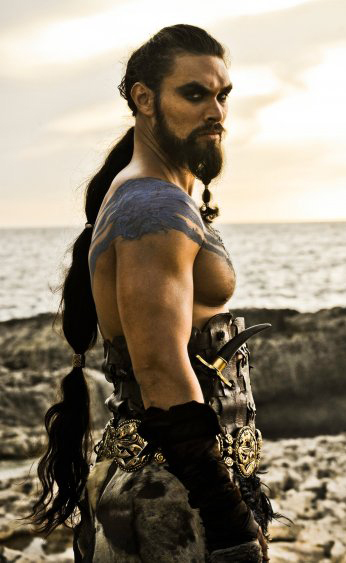
He stayed mostly in Brittany for the next 14 years until he decided the time was right to take the throne from the increasingly unpopular Richard III. Henry pledged to marry Edward IV's eldest daughter Elizabeth (you can read more about Henry and Elizabeth's relationship here!). His betrothal to Elizabeth was important as, with the supposed deaths of her brothers, she was the heir to the throne should her childless uncle die. Daenerys is also certainly no stranger to marriage for the sake of conquest, and much like Henry and Elizabeth's relationship, her relationship with Khal Drogo was genuine affection which blossomed within an arranged marriage. 


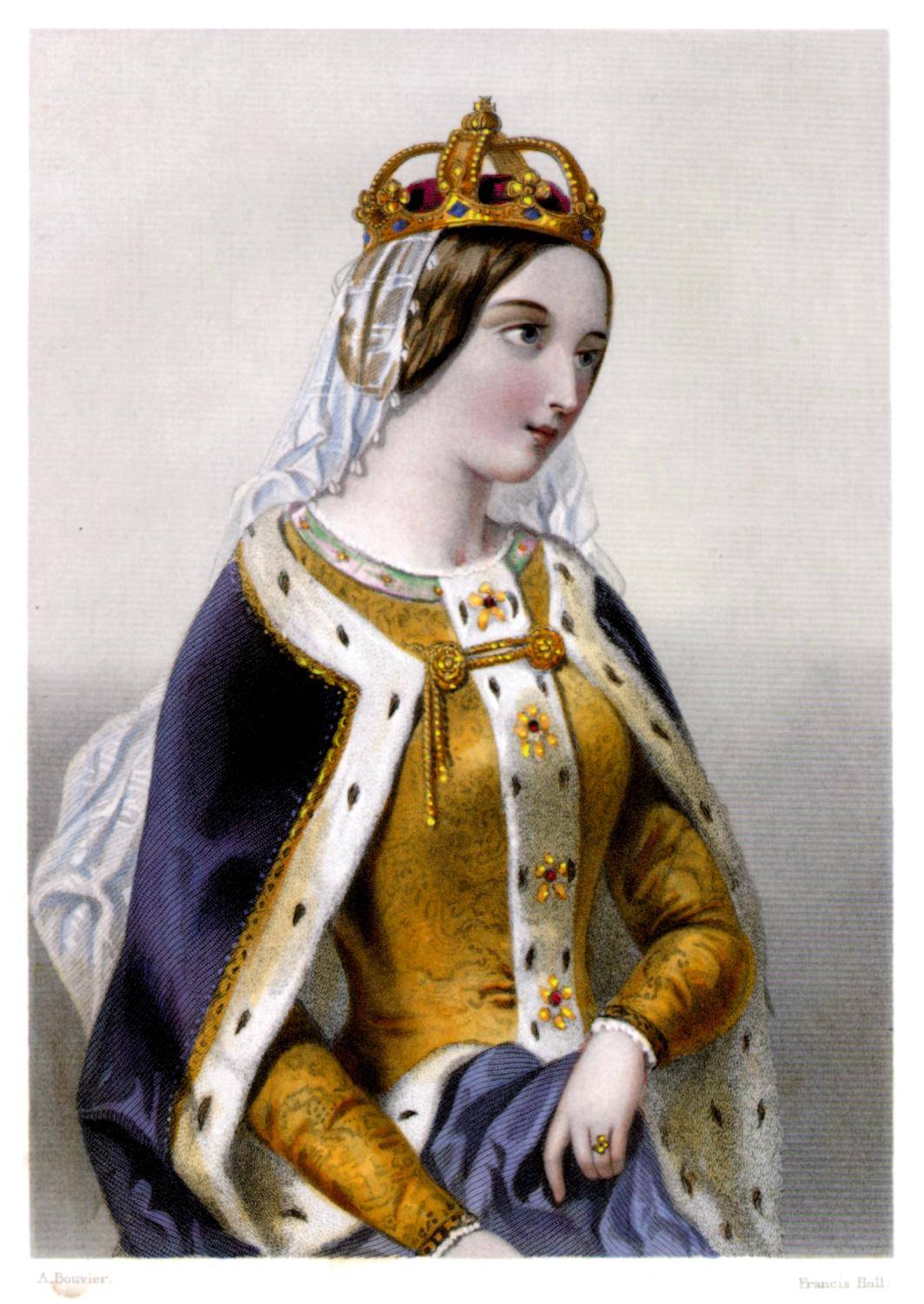
Catherine of Valois
His first attempt to invade was unsuccessful, but with the support of the French - after all, Henry's paternal grandmother was Catherine of Valois - a second invasion was successful, landing him in Pembrokeshire, near his birthplace, where the Welsh people fervently supported him. Some of them even believed him to be Y Mab Darogan - "The Son of Prophecy" - a figure from Welsh legend who would free the Welsh from English oppression. Previous contenders for the title were figures such as Llywelyn ap Iorwerth and Owain Glyndŵr, who may be familiar to those of you who are fans of Maggie Stiefvater's Raven Cycle.

Henry was no fool. He knew exactly how important Welsh support would be if he was to take the throne from Richard, and so when he met Richard on the battlefield he brandished the Welsh flag on his standard. We're pretty much all familiar with the Targaryen sigil, right? Unsurprisingly, their sigil is a dragon. How many of you outside of the UK are familiar with the Welsh flag?


The Welsh flag

Yep. Turns out Henry had a dragon on his flag, too.


I think we can all agree that Daenerys and Henry are not at all replicas of one another, but I think there are certainly enough similarities there to show the historical influences on Martin's epic series.

What do you think? Are there any other characters you think have links to certain figures from history?

Wednesday, 15 October 2014

Pembroke Castle!

On Saturday my Dad and I visited Pembroke Castle and spent the day there. I've been wanting to go there for ages, so it was great fun to go there at last! It was my birthday on Friday and my parents got me a snazzy, brand new camera so I took a whole bunch of pictures and I thought I'd share some of them with you.

Pembroke Castle first sprung into existence as a Norman motte-and-bailey in 1093 - meaning some kind of castle has stood on the site for 921 years! - beside the River Cleddau in Pembrokeshire. It's the original seat of the Earldom of Pembroke, the birthplace of Henry VII and the place from which the Second English Civil War began. That's a lot of history!


The Castle went through a lot of restoration work in the early 20th century, meaning that it's a beautiful place to visit and there's still so much there to explore and walk around. The steps were pretty steep and slippery though; I almost broke my neck walking up and down them, so I have no idea how women managed it in their floor-length dresses!

Inside there were lots of long, dripping hallways and narrow windows and murder holes. It was very atmospheric, and really inspiring for my NaNo project this year!


One of the best things I saw while I was there was this little tidbit of information regarding the beginning of the Tudor dynasty: 

Sounds like a great party!


I love me some Tudor history. The main reason I wanted to visit Pembroke Castle is because it is the birthplace of Henry VII, the first Tudor King who won the Wars of the Roses and began the Tudor dynasty.

Lady Margaret Beaufort, Henry VII's mother.
Baby Henry VII and his nursemaid.
It turns out that Pembroke Castle is also home to one of the only remaining Medieval dungeons that was originally built as a dungeon; many dungeons were originally built as cellars!

I quite like this shot of the dungeon tower through the arch.
During the Medieval period dungeons were reserved for nobility, most of the lower classes were either fined, maimed or executed. Then again, judging by the sad story of John Whithorne, being a member of the nobility wasn't really any better than any other punishment.


A mannequin of Whithorne in the dungeon.

Oh, and it turns out there's a cave under Pembroke Castle that's been there since the Romans were around!

It's huuuuuuuuuuuge!
So if you ever find yourself in Pembrokeshire I recommend checking out Pembroke Castle, it's a fantastic day out!

Saturday, 1 March 2014

Wales in Fiction!

Happy St David's Day/Dydd Gŵyl Dewi!

I'm not Welsh, but my parents, my sister and my niece all live in South Wales, and I feel like Welsh Fiction - whether it's fiction written in Welsh, written by the Welsh, or simply set in Wales - doesn't get enough recognition.

So today I thought I'd share with you five books, all of which are still on my TBR shelf, to spread a bit of Welsh love!


Celtic mythology, Arthurian romance, and an intriguing interpretation of British history--these are just some of the themes embraced by the anonymous authors of the eleven tales that make up the Welsh medieval masterpiece known as the Mabinogion. They tell of Gwydion the shape-shifter, who can create a woman out of flowers; of Math the magician whose feet must lie in the lap of a virgin; of hanging a pregnant mouse and hunting a magical boar. Dragons, witches, and giants live alongside kings and heroes, and quests of honour, revenge, and love are set against the backdrop of a country struggling to retain its independence.


by Richard Llewellyn

Growing up in a mining community in rural South Wales, Huw Morgan is taught many harsh lessons. Looking back, where difficult days are faced with courage and the valleys swell with the sound of Welsh voices, it becomes clear that there is nowhere so green as the landscape of his own memory.


by Sharon Penman

Thirteenth-century Wales is a divided country, ever at the mercy of England's ruthless, power-hungry King John. Then Llewelyn, Prince of North Wales, secures an uneasy truce with England by marrying the English king's beloved, illegitimate daughter, Joanna. Reluctant to wed her father's bitter enemy, Joanna slowly grows to love her charismatic and courageous husband who dreams of uniting Wales. But as John's attentions turn again and again to subduing Wales--and Llewelyn--Joanna must decide to which of these powerful men she owes her loyalty and love.


by Robin Llywelyn

Gwern started the war. By mistake. He and his friends, Pilgrim and Saffron Tinker, are trying hard to put things right. Perhaps a little too hard. Their journey takes them across Sunless Summer to the badlands on a diet of ice locust sandwiches. They get promoted as diplomats and even manage fifteen minutes as fighter pilots. As the evil Empire of the Heartless Bodies threatens to conquer the High Country, Gwern, Pilgrim and Saffron Tinker are learning a lot about allegiance.


by Peter Ho Davies


Young Esther Evans has lived her whole life within the confines of her remote mountain village. The daughter of a fiercely nationalistic sheep farmer, Esther yearns for a taste of the wider world that reaches her only through broadcasts on the BBC. Then, in the wake of D-day, the world comes to her in the form of a German POW camp set up on the outskirts of Esther's village.


The arrival of the Germans in the camp is a source of intense curiosity in the local pub, where Esther pulls pints for both her neighbors and the unwelcome British guards. One summer evening she follows a group of schoolboys to the camp boundary. As the boys heckle the prisoners across the barbed wire fence, one soldier seems to stand apart. He is Karsten Simmering, a German corporal, only eighteen, a young man of tormented conscience struggling to maintain his honor and humanity. To Esther's astonishment, Karsten calls out to her.

These two young people from worlds apart will be drawn into a perilous romance that calls into personal question the meaning of love, family, loyalty, and national identity. The consequences of their relationship resonate through the lives of a vividly imagined cast of characters: the drunken BBC comedian who befriends Esther, Esther's stubborn father, and the resentful young British "evacuee" who lives on the farm -- even the German-Jewish interrogator investigating the most notorious German prisoner in Wales, Rudolf Hess.

Do let me know if you've read any of these! I actually have a copy of White Star on the way to me in the post - I'm really interested in reading it because it's a translation, having originally been written in Welsh under the title Seren Wen ar Gefndir Gwyn.

I'm hoping to read all of these this year!