Showing posts with label gothic literature. Show all posts

Saturday, 7 May 2016

Is Northanger Abbey really a parody?

When it comes to horror, writers like Stephen King, James Herbert and H.P. Lovecraft are probably some of the first to spring to mind, but women have been at the centre of horror since horror began.

It was eighteen year old Mary Shelley who penned Frankenstein, and Carmilla was terrorizing young maidens in their beds a quarter of a century before Dracula washed up on the Whitby shore. The protagonists of Gothic novels are primarily young women trapped in eerie houses with limited and frightening prospects, and it’s a trope that continues to influence us, from the Alien franchise’s Ellen Ripley to Edith Cushing, the heroine of Guillermo del Toro’s latest film, Crimson Peak.

Needless to say, there’s no shortage of women in horror, whether they be in the starring roles or the orchestrator of all that chaos.

Though most famous for her comedy of manners stories, Austen’s first completed novel, Northanger Abbey, was a parody of the Gothic novels she was most likely reading at the time. Pride and Prejudice is widely considered to be Austen’s masterpiece, but personally I’ve always preferred the story of the young, obsessive reader who lets her imagination get the better of her.
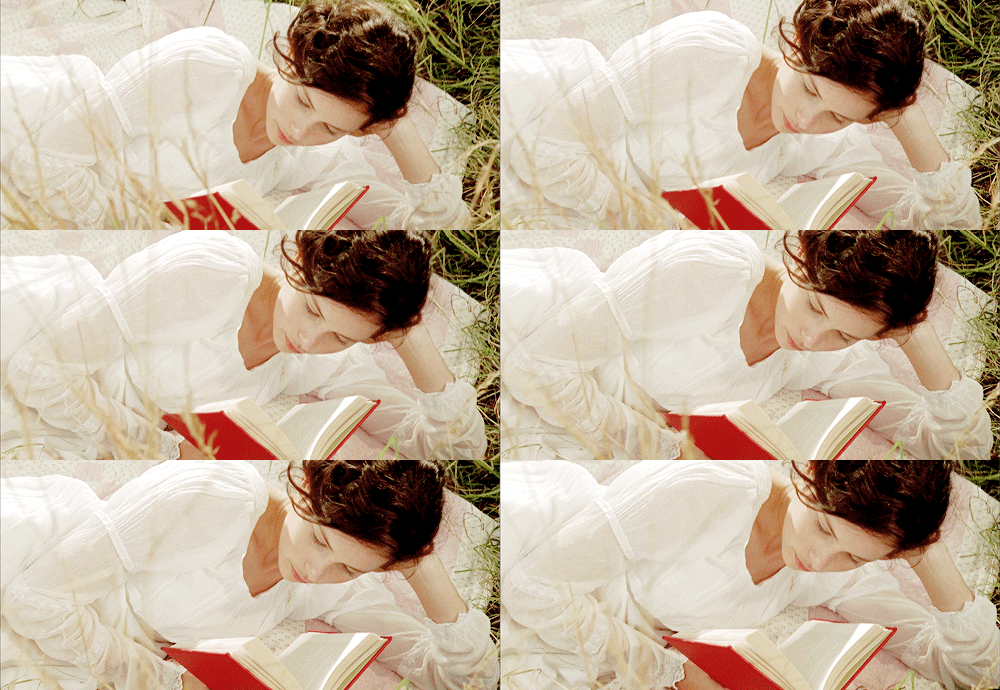

‘Silly’ is a word I often see thrown about when describing Catherine, and to be honest I think it's unfair. Catherine is naïve, gullible and imaginative, but never silly. You see, I’m not sure that Northanger Abbey really is a parody.

Catherine’s no saint; she makes (some rather hurtful) assumptions that lead to embarrassing consequences, making her, like all of Austen’s heroines, an ancestor of today’s Bridget Joneses and Carrie Bradshaws. Upon first meeting General Tilney, Catherine casts him as the villain in her own personal story. He’s the cold, calculating man who so values wealth that poor, dowerless Catherine is certain she’ll never be able to marry his son, Henry, unless the two of them romantically run off into the sunset.

Naturally she’s surprised when the General invites her to his home, Northanger Abbey, and the Gothic fangirl in Catherine simply can’t resist the opportunity to stay in a place that sounds as though it belongs in one of her favourite novels. Unfortunately, the Gothic fangirl in Catherine also comes to the conclusion that the General murdered his wife. Oh dear.

Ultimately Catherine learns her lesson and resolves not to let herself get carried away by the novels she loves. She and Henry marry and have a baby, leaving Catherine in a state of domestic bliss as the novel comes to a close.

That’s all well and good, but there’s more to this novel than a young girl learning from her mistakes. It’s true that Catherine is wrong about the General murdering his wife, but she isn’t wrong about him. The General proves to be a villain not only in the way he treats Catherine, but in the way he treats his own family; Henry himself admits that while his father is no murderer, his mother was so unloved that the General’s treatment of her certainly hastened her arrival at the pearly gates.

Northanger Abbey is haunted in much the same way that Thornfield Hall and Manderley are; Rebecca de Winter might not be visible, but she is very present throughout Rebecca, and Bertha Mason quite literally haunts the attic of Thornfield, so much so that the servants mistake her for a ghost. Mrs Tilney’s rooms are closed up and disused, as though the very memory of her has been banished to a solitary part of the house. Northanger Abbey is a living museum of domestic unhappiness.

There may not be murder, scandal or supernatural creatures in Northanger Abbey, unlike many of the other pre-Victorian examples of Gothic literature, such as Mary Shelley’s Frankenstein and Matthew Lewis’s The Monk, but there is a quieter horror at work here that would have seemed much more real to Austen and the other women of her day.

Mrs Tilney’s fate was one which befell many women whose husbands married them for their wealth alone, and then treated them like breeding mares. Just like today, many marriages during the Regency period would have been happy ones, but the unhappy ones were very unhappy. Back then women had even less rights than today; they couldn’t vote, often weren’t granted a divorce when they were brave enough to seek one, and signed over everything they owned to their husbands when they were married.


Catherine may read the situations around her through a Gothic lens, but the conclusion she comes to - that General Tilney is a villain (of sorts) - is ultimately correct. She recognises that Mrs Tilney was the victim of a miserable marriage, and in doing so Austen rewards her with a happy one of her own.


Friday, 6 November 2015

Sci-Fi Month | Is Alien Gothic?


Sci-Fi Month is hosted by Rinn @ Rinn Reads, and this year I'm participating!


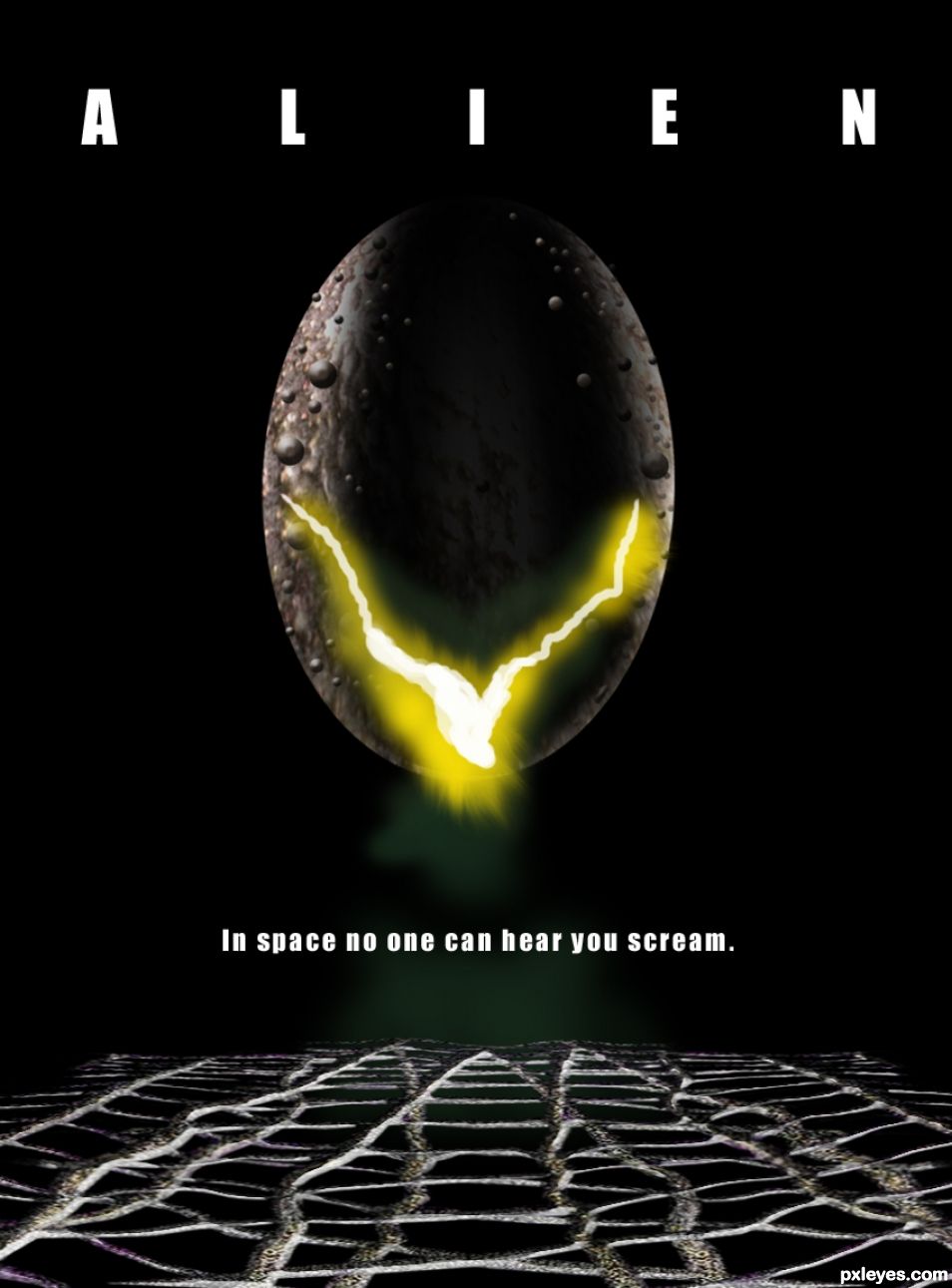
Alien is probably one of the most iconic sci-fi films of all time, but is it also a Gothic story? Well, I would argue it is!

(If you've never seen Alien and you want to, I recommend you watch it before you read this because I will be talking about things that will spoil the ending for you!)

The rise of Gothic literature began in the latter half of the 18th century, with Horace Walpole's The Castle of Otranto, published in 1764, being regarded as the very first Gothic novel. Gothic has stayed around ever since, becoming hugely popular during the Victorian period; proven by the popularity of Penny Dreadfuls, and the publication of staples of Gothic literature such as Bram Stoker's Dracula, Robert Louis Stevenson's The Strange Case of Dr Jekyll and Mr Hyde and Charlotte Brontë's Jane Eyre. Even before the Victorian period there was Mary Shelley's Frankenstein, published in 1818, and earlier still was the work of Ann Radcliffe, author of books such as The Mysteries of Udolpho (1794) and The Italian (1797).

Even Jane Austen had a go at the Gothic novel in her somewhat tongue-in-cheek friendly parody, Northanger Abbey. Though it was one of the last novels of hers to be published, it was the first one she wrote, and something of a homage to much of the Gothic literature Austen was probably reading at the time.

Later, in the 20th century, Southern Gothic emerged as a new strand of American literature; stories which took place in the American South, and include authors such as William Faulkner, Cormac McCarthy and Anne Rice.

Today we have contemporary Gothic, and tributes to the older work of a genre that we simply haven't let go of. Shows like Penny Dreadful are proof of how much we still love Gothic, and Guillermo del Toro's latest film, Crimson Peak, is a homage to all of those Gothic stories that have inspired him since childhood.

That's all well and good, Jess, but where the hell does Alien come into all of this?

Well reader, let me explain!

Something can only really exist as a genre if there are tropes and similarities between the various stories. Jane Eyre is Gothic, but Agnes Grey is not, and yet both of them are Victorian novels about the life of a governess. So what makes one Gothic while the other is not?

Gothic saw the rise of the monster in literature - from Frankenstein to Carmilla to The Were-Wolf - but the setting is also incredibly important to a Gothic novel. You're not about to open a Gothic novel that's set in a quaint little country bakery, or in a busy, bustling city centre; isolation is vital to a Gothic novel, as is a character who must be isolated and, perhaps most importantly, threatened.

Naturally, that isolated, threatened character, more often than not, is a vulnerable and (probably) virginal young lady. She's Jane Eyre in Thornfield Hall; Catherine Morland in Northanger Abbey; Emily St. Aubert in Udolpho; Mrs de Winter in Manderley; Ellen Ripley in Nostromo.

There's a lot of cross-over between Gothic and horror, though the two aren't the same. In Drew Goddard and Joss Whedon's brilliant 2012 film The Cabin in the Woods, they talk about the archetypes in horror - The Whore, The Athlete, The Scholar, The Fool, The Virgin - and how it is always The Virgin who either survives or dies last. This idea translates to Alien, too, and it must be one that's been influenced by the pool of Gothic heroines from the 18th century and beyond. By the end of the movie Ripley is the only survivor from the Nostromo, starting a franchise that has given us one of the best action heroines in film history, but only after she's fought her way free from the Nostromo and the monster lurking inside it.

The Nostromo might not be a manor house, but it's certainly an isolated, claustrophobic setting. After all, where is more isolated than outer space? The Alien might not be as sophisticated as Dracula or as tragic as Frankenstein's Monster, but she's still become one of the most famous monsters around. Ellen Ripley might not be defenceless and innocent in the same way someone like Catherine Morland is, but she's certainly a descendent of those earlier Gothic heroines; a mixture of vulnerability and capability, and downright determination, that have made her one of the most genuine heroines to come out of '70s movies.

So, is Alien Gothic? Yes - and it's brilliant!