Monday, 8 June 2015

#TBRTakedown Readathon | Wrap-Up!

Last week I took part in Shannon @ Leaning Lights's TBRTakedown Readathon. I managed to finish three books in total, which I'm pretty pleased with!


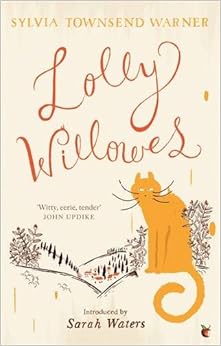
by Sylvia Townsend Warner

Lolly Willowes is a twenty-eight-year-old spinster when her adored father dies, leaving her dependent upon her brothers and their wives. After twenty years of self-effacement as a maiden aunt, she decides to break free and moves to a small Bedfordshire village. Here, happy and unfettered, she enjoys her new existence nagged only by the sense of a secret she has yet to discover. That secret - and her vocation - is witchcraft, and with her cat and a pact with the Devil, Lolly Willowes is finally free. 

My Rating: 


by Samantha Ellis

While debating literature’s greatest heroines with her best friend, thirtysomething playwright Samantha Ellis has a revelation—her whole life, she's been trying to be Cathy Earnshaw of Wuthering Heights when she should have been trying to be Jane Eyre.

With this discovery, she embarks on a retrospective look at the literary ladies—the characters and the writers—whom she has loved since childhood. From early obsessions with the March sisters to her later idolization of Sylvia Plath, Ellis evaluates how her heroines stack up today. And, just as she excavates the stories of her favorite characters, Ellis also shares a frank, often humorous account of her own life growing up in a tight-knit Iraqi Jewish community in London. Here a life-long reader explores how heroines shape all our lives.

My Rating: 


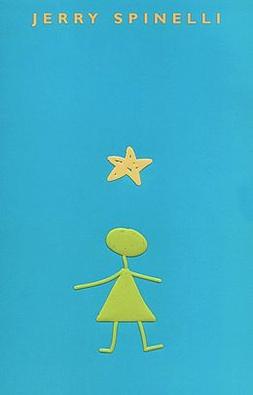
by Jerry Spinelli

From the day she arrives at quiet Mica High in a burst of color and sound, hallways hum “Stargirl.” She captures Leo Borlock’s heart with one smile. She sparks a school-spirit revolution with one cheer. The students of Mica High are enchanted. Until they are not. Leo urges her to become the very thing that can destroy her - normal.

My Rating: 


As I'm sure you can tell by my ratings, How To Be a Heroine was the best thing I read last week, and probably one of the best things I've read this year. I've been on a real non-fiction kick lately, and I'm on the lookout for more!

Did you take part in the readathon last week? What did you read?

Friday, 5 June 2015

Should Our Books Have Trigger Warnings?


Get ready, guys. This is a long one.

Last year there was a lot of talk about the inclusion of trigger warnings in books. There were people who agreed with them, people who didn't, and people who didn't really give a hoot either way. I meant to write this post last year, and just didn't. I guess I wanted a little more time to mull over what I thought before I wrote a discussion post like this.

Now the first thing I will say is that my views aren't meant to offend or insult anyone, though I hope they won't, and I'll also say that I'm very lucky in that I've never needed trigger warnings. There are certain things I don't like to read or watch, but thankfully I've never experienced any traumatic or upsetting event that has made me require trigger warnings. I just wanted to get that out there because there's a good chance that people who do need trigger warnings may have very different views on this topic to me.

Last year I completed an MA in Creative Writing. This was a year in which I got to dedicate my time to a creative project in the form of a 30,000 word portfolio as well as a 5,000 word reflective essay to accompany the creative work. Including me there were ten people on my course, and it was nice to have such a small number of us; everyone was working on something completely different, and we had two seminars a week in which we read extracts from each other's work and offered constructive criticism.

Very early on in the MA, we all agreed we would include trigger warnings at the beginning of our submissions, in fact it was requested by a couple of my fellow students. Sometimes trigger warnings are necessary; they were certainly necessary for one of the students on my course, who frankly wrote some pretty horrific stuff. Immediately there was a debate as to whether or not they were needed, and not surprisingly the one student whose work was most in need of trigger warnings was the one student who disagreed with them most vehemently. The rest of us were happy to include them - ultimately, it was no skin off our nose.

In truth practically none of us - aside from one student - wrote particularly graphic, violent scenes, but trigger warnings aren't only used for violence. Some students found it difficult to read about mental or sexual abuse, sometimes because, like me, they just didn't like reading about it, and sometimes because they had unfortunately experienced it themselves. Others, such as a good friend of mine, found it very difficult to read about any form of violence towards animals.

But where do we draw the line between a trigger and something that people just don't want to read?

There are some books which have trigger warnings already. The first one that springs to mind is Danielle Vega's The Merciless. I haven't actually read this book, but I do know there is a warning at the beginning because it includes graphic scenes of torture. 

Pretty cover, though.
Some people are squeamish, there's no shame in that, and a trigger warning like this is very useful, particularly when the cover of The Merciless is so simple and, in some ways, rather misleading as to its contents. The trigger warning's also great for people for whom torture is a trigger; some people find it very, very upsetting to read about other people being tortured, or to watch it for that matter - I know a few people who will never go near the SAW movies for that very reason.

I guess what I'm saying is trigger warnings are good for people who need them, but what about the people who don't? Trigger warnings for them are unnecessary, they may even be considered a spoiler. What if a book includes a trigger warning that manages to ruin an upcoming scene in the book? And how much of a book needs to be considered a trigger to warrant a trigger warning? Would one little scene justify putting a warning right at the front of a book? What if that put a reader off reading it when, in reality, the majority of the book is perfectly safe for them to read, and the triggering scene may be so minute they may not even find it triggering? Could the warning itself, then, actually make the trigger worse than it is by making the reader feel as though they're building up to something awful?


Who decides what counts as a trigger? People who have triggers themselves, or the people that don't?

Most importantly, as someone who doesn't require trigger warnings, is my opinion even valid? After all, I have no right, nor does anyone who doesn't have triggers, to criticise another person for theirs.

I don't mind trigger warnings in books for those who need them. Perhaps the ideal solution is to print two versions of each book, one with triggers and one without, but as someone who works in publishing I know how costly and tricky that would be for most publishing houses. I do think there are some real benefits to including trigger warnings, however, that even go beyond the simple reason of protecting readers with triggers. The main advantage I can see is that trigger warnings might help some readers who want to explore a certain topic more.

For example, if someone wanted to read more about characters who experience eating disorders or substance abuse or self-harm they'd be easier to find, and those readers would find it much easier to broaden their knowledge on a certain topic or even come to terms with their own struggles. Books, after all, are wonderful healers.

Having said that, I can't help but find trigger warnings a little concerning. I'm not one of those people who thinks someone with a trigger should 'just get over it', and I think people who do have that point of view need to go and give themselves a long, hard look in the mirror.


 As someone with friends who have triggers I would never want to do anything that made them feel as though they were 'just being dramatic'; there's a reason I have friends who are triggered by violence towards animals and sexual abuse and terminal illness, and I never want to make them feel unsafe.

No, my worries are fairly simple. Where does it end? 

As a feminist I'm constantly met with 'not all men' whenever I'm debating something or fighting for what I believe to be right, because for some reason some men find their gender being accused of misogyny more infuriating than the fact that all women, at some point, have been made to feel unsafe, belittled or downright pissed off by a man. My worries with trigger warnings would be whether or not there would be some sort of backlash.

Would racists and homophobes request trigger warnings to warn them that the book they're holding in their hands includes POC or LGBT+ characters? I'd like to think publishers would never agree to that - in fact I'm sure they wouldn't - but these people have a way of ruining a good thing for everyone else, and if they couldn't have trigger warnings then perhaps nobody could and we're back to square one.

My other, perhaps even bigger concern, is for the younger readers with strict parents. I was very, very lucky growing up in that my parents let me read whatever I wanted; whenever they asked me what I was reading it was because they were curious, not because they wanted to know if it was appropriate. My parents trusted me to read what I felt ready to read, and they trusted me to put a book down if I was finding it uncomfortable. When I was very young they always read to me, so if anything did frighten me, which I don't think it ever really did back then (it's hard to get frightened by Biff and Chip), they'd be there for me to talk to about it.


This was one of the best gifts my parents could have given me. Not only was their trust liberating - I could read anything I wanted, so I got to explore so many stories from a young age - but it meant that I got to discover for myself what I found uncomfortable, and think about why that was.

I've known people who, as children, were only allowed to read what their parents approved for them first. Time and time again I've heard stories of children who desperately wanted to read Harry Potter but weren't allowed to because their parents and grandparents believed it was anti-Christian. When parents do this to their children they don't let them decide what scares them or upsets them, and all that creates is blind hatred, ignorance and bigotry. When my parents let me read whatever I wanted it meant I got to explore race, gender and sexuality during my early teens, and it made me a much more socially aware person.

I'm not saying parents shouldn't be involved in their children's reading - for heaven's sake read with your children, they love that! - but creatively strict parents have a lot to answer for, and I can't think of anything worse than one of those parents with a trigger warning. Their children would never be able to read again.

Should our books really be censored? Literature is one of the ultimate artistic modes of freedom - you have to be a certain age to see a film, but your age doesn't matter when you crack open a book - and each year we even celebrate Banned Books Week. There's a big difference between banning a book and adding a trigger warning, of course, but would adding trigger warnings somehow lead on to banning certain books altogether?

Ultimately I've given myself about a year to think about this topic and I still don't have a straight answer, and I don't think I ever will. As with most things I can see the pros and cons of including trigger warnings in the books I read, though as someone who doesn't need them I'm still not entirely sure if my thoughts on the matter are even valid.

What do you think?

Thursday, 4 June 2015

The Unpopular Opinions Tag!

Today I'm here with the Unpopular Opinions Tag. This was originally created over on YouTube by TheBookArcher, and you can find the original video here!


A Popular Book or Series You Didn't Like

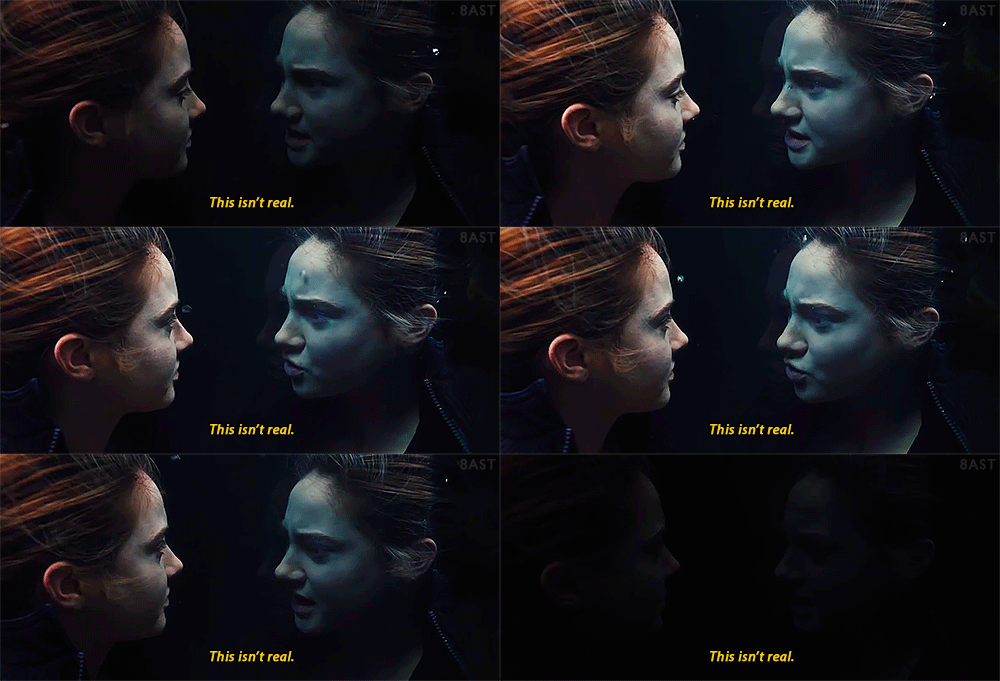
I feel like there have been quite a few, but I'm going to go with Divergent by Veronica Roth, which I ended up DNFing. Me and that book just didn't click. I thought the protagonist had zero personality and the world was entirely unbelievable; I haven't gone near any dystopia for a while because with the whole hype around it I just got sick to the back teeth of looking at it, but for me a good dystopia has to be threatening. I have to believe that the events in the book are possible - that's why The Hunger Games works so well, because we are obsessed with violence and reality TV and celebrity culture. Sadly the society that Roth created just didn't do it for me, but props to her for finishing the trilogy the way she did - that takes guts!


See? Even Tris doesn't believe it.

A Popular Book or Series You Love but Everyone Else Hates

I'm not sure if there is one. I tend to be the grumpy person who doesn't like the popular book/series, so I have no idea.


A love triangle where the main character ended up with the person you did NOT want them to end up with

I'm still really mad that Katniss ended up with Peeta. I didn't want her to end up with Gale, either, I just wanted everyone to leave the poor girl alone. I wrote a post about My Problem with Peeta if you're interested in hearing my thoughts!


A Popular Genre that You Rarely Reach For

Contemporary I guess? I mean I think the genre I read the least of is horror, but I don't think horror is hugely popular amongst the other readers I know anyway. I don't mind contemporary, but it's not my first choice.


A Popular/Beloved Character You Do NOT Like


I was going to say Peeta again here, until I remember how much I hate Snape. I know Snape is a favourite amongst quite a few Harry Potter fans, but I hate the guy. I hate that he's a teacher who bullies his pupils (seriously what kind of adult bullies children?) I hate that Neville hates him so much that Snape is his boggart (really think about that for a moment; Neville's living during an incredibly dangerous time of wizarding history and he's seen what the cruciatus curse can do firsthand, but what terrifies him most in the world is one of his teachers) and I hate that everyone dismisses his horrific behaviour as okay because he was in love with someone who didn't love him back. Boo-fucking-hoo. I'm glad he died.


A Popular Author You Can't Seem to Get Into

I tried reading Throne of Glass and just couldn't get into it, and A Court of Thorns and Roses doesn't interest me in the slightest. I know she's hugely popular, but I'm sadly not a fan.


A Popular Book Trope You're Tired of Seeing

I loathe love triangles with a passion. I really, really, really hate them.


A Popular Series You have No Interest in Reading

The Shatter Me trilogy by Tahereh Mafi. There's another love triangle in this trilogy, and I know everyone loves Warner but I hate it when a character's shitty behaviour is excused by daddy issues.

What movie or TV adaptation do you prefer to the book?

For the most part I do think books are better than their movies, but I also like to look at the two mediums separately and I'll always find adaptations fascinating, but one film I liked more than the book would have to be Henry Selick's adaptation of Coraline by Neil Gaiman.


The book is wonderful, but the film just adds more and it's marvellous. Plus Henry Selick also directed The Nightmare Before Christmas so he's always going to be one of my favourite directors.


I tag:

Anyone who wants to do this tag!

Wednesday, 3 June 2015

This Week in Books | 03/06/15


This Week in Books is a feature created by Lipsy @ Lipsyy Lost and Found which gives bloggers an opportunity to share what they've read recently and what they're hoping to read next.

Last week I mentioned I was thinking about picking up The Goblin Emperor as I was in the mood to get back into high fantasy, but instead I decided to start Darkhaven by A.F.E. Smith. I received my review copy from Netgalley, and I wanted to start it so that I could rate and review it in plenty of time - it comes out next month and so far I'm enjoying it!
I finished Jane Eyre's Sisters: How Women Live and Write the Heroine's Story by Jody Gentian Bower last week and absolutely loved it. It reminded me I need to read more non-fiction, which is the reason why I'm also currently reading How To Be a Heroine by Samantha Ellis.
I'm taking part in Shannon @ Leaning Lights's TBRTakedown Readathon which is running this week. There are a few challenges, but no rules, the aim is just to cross as many books off your TBR as you want to! I do love attempting challenges, though, and one of them is to read a book that's been on your TBR for over a year. I've owned Stargirl by Jerry Spinelli for at least two years, and it's super short, so I'd like to cross it off my TBR and I think its length makes it a great choice for a readathon.

What are you reading?

How Do You See Cinder?

Yesterday during Top Ten Tuesday Cait @ Paper Fury asked a question about the ethnicity of Linh Cinder, heroine of The Lunar Chronicles, that got me thinking: is Cinder herself Asian or not?

I've said before how much I love The Lunar Chronicles, one of the many reasons being that it's one of the most diverse series I've ever come across. There are characters from all different ethnicities, four completely different heroines who are never pitted against one another, a leading heroine who's missing an arm and a leg and a 'Prince Charming' from Beijing. It's such a fantastic series.

Now I have to admit that upon first reading Cinder I didn't picture Cinder herself as Asian, though I didn't picture her as white either. Something about the way Marissa Meyer describes her made me picture her as Hispanic, though I have seen many people picture her as Asian.

But the more I thought about it, the more I thought: Why on earth would a group of rebels hide someone as important as Cinder in China if she was going to stick out like a sore thumb? Surely she was taken to China because she could blend in.

Does that mean she's Asian? Personally, the more I've thought about Cinder the more I've come to imagine her as mixed race and there are three reasons for this:

1) I'm not entirely sure that Levana and Channary are/were Asian (though I could be wrong!), but there's every chance that Cinder's biological father was. After all, Luna itself is brimming with all different kinds of ethnicities, so I imagine a lot of the population of Luna is made up of mixed race people anyway; Winter is also mixed race.

2) I always thought that Cinder not being Asian was something else that distanced her from her neighbours. Not only is she a cyborg, but she's also 'not from around here'. I'm not trying to imply that mixed race people are social outcasts, but even today some mixed race people face prejudice from both sides of their heritage.


An Anglo-Indian Harry, art by Brigid Vaughn
3) I love reading books with diverse characters - I've had more white protagonists than I've had hot dinners - but I think I've read even less mixed race protagonists. The only one that springs to mind straight away is Callie from Malorie Blackman's Noughts & Crosses series. I know there are some books that don't describe skin colour, leaving it open to the reader's imagination (recently there's been a lot of reimagining of Harry Potter as an Anglo-Indian character, which I love), but sometimes authors need to take it that step further and say 'This character isn't white. End of story.'

Why is this important? Because representation matters.

The people who disagree with that statement, and thankfully I've never met a single book blogger who disagrees with that statement, are also the kind of people who would immediately picture Cinder as white. So the people who do disagree with that statement also end up proving it to be true, because they picture Cinder as they are, regardless of the fact that she's described as having 'naturally tanned skin' and that she lives in China.

What are your thoughts? How do you see Cinder?

Thanks to Cait @ Paper Fury for inspiring me to write this post!

Tuesday, 2 June 2015

Top Ten Tuesday | Lights, Camera, ACTION!


Top Ten Tuesday is a weekly feature created at The Broke and the Bookish. Each week you compile a list of ten books which coincide with that week's theme. You can find everything you need to know about joining in here!


This week's theme is 'Top Ten Books I'd Love To See As Movies/TV Shows'. I love adaptations; there's always the fear that an adaptation is going to be terrible, especially if it's an adaptation of a book you love, but from a critical point of view I find all adaptations fascinating. I love to know why certain decisions were made: why the costumes look the way they do, why that setting was chosen, why that actor was cast, how the director first came to know the book if they knew it before at all.

I love films and there are a few TV shows I adore, so while I'm certainly no expert I tried to assign a director to each of these make-believe adaptations because I thought it'd be fun to give an idea of the kind of adaptation that I'd love to see!


We Have Always Lived in the Castle by Shirley Jackson: I read this not too long ago, and Jackson has quickly become one of my favourite authors - she's certainly my favourite horror writer! Heavily inspired by the above cover, I'd love to see Henry Selick create a monochrome stop motion adaptation of this. We so often associate stop motion with children's films, and I think that combined with how grotesque you can make stop motion figures would make for a really atmospheric southern gothic film. Henry Selick's no stranger to adaptations, he's the director of Coraline and also the director of The Nightmare Before Christmas and, most recently, The Box Trolls.

Haroun and the Sea of Stories by Salman Rushdie: I had to read this during my first year of uni, and though I wasn't expecting to like it I ended up loving it. It's such a fun, vibrant story - well worth a read if you're a fan of retellings - and I think this would work wonderfully as a Studio Ghibli film. Studio Ghibli are also familiar with adaptations; they're the company responsible for the brilliant adaptation of Howl's Moving Castle!

The Silence of the Lambs by Thomas Harris: Okay, so obviously The Silence of the Lambs already has an amazing film adaptation starring the fantastic Anthony Hopkins and Jodie Foster - if you haven't already, watch it, it's so good - but I'm also a huge fan of the show Hannibal, created by the marvellous Bryan Fuller who's also adapting Neil Gaiman's American Gods for TV. I'm really hoping the show gets the rights to Clarice so they can eventually tackle the Silence of the Lambs story in the show.

American Vampire by Scott Snyder and Rafael Albuquerque: I can't be the only one who thinks this would make a really fun TV series, right? I've really gotten into this series this year, and if it were to be adapted I'd love to see someone like Guillermo del Toro at the helm. I feel as though del Toro would be a wonderful fit because he could handle the darker, spookier elements, he's the director of Pan's Labyrinth and the executive producer of Mama after all, and he'd be able to co-ordinate all the action sequences, too, as he's the director of the Hellboy films and Pacific Rim. He's no stranger to TV, either - in fact he's one of the co-creators of The Strain, which just so happens to deal with vampirism.

My Life as a White Trash Zombie by Diana Rowland: Personally I think this would make such a fun Tim Burton movie. Just so long as Johnny Depp and Helena Bonham Carter weren't playing the leads. Don't get me wrong, I love them, but it's time to give some other actors a bit of work! Burton has this habit of mixing bright, vibrant colours with really macabre situations (e.g. in Corpse Bride the land of the living is black and white, whereas the afterlife is bright and colourful) and I think that would work really well with this story.


Rolling in the Deep by Mira Grant: I mean... this story's just meant to be adapted into a found footage horror movie, right? It'd be so much fun to watch, not to mention creepy as hell if given to the right creative team.

Rat Queens by Kurtis J. Wiebe, Roc Upchurch and Stjepan Sejic: I've heard rumours that this series is going to be adapted into an animated series, and I really, really hope those rumours are true.

The Crown by Nancy Bilyeau: There have been an awful lot of historical fiction adaptations on the BBC recently - The White Queen; Wolf Hall; Poldark; The Strange Case of Jonathan Strange and Mr Norrell - but I'd love to see some more ladies in these adaptations, and given that so much of The Crown takes place in a nunnery I think it'd be a really fun crime drama to watch.

Feed by Mira Grant: Yet another Mira Grant book. You all know how much I love this one, and though I'd be worried that an adaptation wouldn't do it justice I do think this book would make an amazing TV show. Every episode could open with one of Georgia and co.'s blog posts, or at least that's how I imagine it.

Where She Went by Gayle Forman: I thought the adaptation of If I Stay was really good, so I'd love to see an adaptation of the sequel, too.

Which books made your list?

Monday, 1 June 2015

Reading Challenge Update!

As I'm sure you can tell by the links on the side of my blog, I'm taking part in a few reading challenges throughout 2015, and it occurred to me that I haven't actually talked about any of my progress yet. So today I'm doing a mass update talking about how my reading challenges are going so far!


2015 Fairy Tale Challenge


The Daily Prophecy

White Ravens by Owen Sheers

The Meat Tree by Gwyneth Lewis

Fairest by Marissa Meyer
(Reviewed here!)

The Sleeper and the Spindle by Neil Gaiman
(Reviewed here!)

Fables, Vol.1: Legends in Exile by Bill Willingham, Lan Medina, Steve Leialoha, Craig Hamilton and James Jean
(Reviewed here!)


2015 Witches and Witchcraft Challenge


2015 Witches &a Witchcraft Reading Challenge


Signal to Noise by Silvia Moreno-Garcia
(Reviewed here!)


The 2015 Sci-Fi Experience


Saga, Vol.1 by Brian K. Vaughan and Fiona Staples

Saga, Vol.2 by Brian K. Vaughan and Fiona Staples

Saga, Vol.3 by Brian K. Vaughan and Fiona Staples

Saga, Vol.4 by Brian K. Vaughan and Fiona Staples

The Meat Tree by Gwyneth Lewis

(Reviewed here!)

(Reviewed here!)

Fairest by Marissa Meyer

Ms. Marvel, Vol.1: No Normal by G. Willow Wilson and Adrian Alphona
(Reviewed here!)

Ms. Marvel, Vol.2: Generation Why by G. Willow Wilson, Adrian Alphona and Jacob Wyatt
(Reviewed here!)

Copperhead, Vol.1: A New Sheriff in Town by Jay Faerber, Scott Godlewski and Ron Riley
(Reviewed here!)

Rolling in the Deep by Mira Grant
(Reviewed here!)


2015 Historical Fiction Reading Challenge


Burial Rites by Hannah Kent
(Reviewed here!)

White Ravens by Owen Sheers

The Crown by Nancy Bilyeau
(Reviewed here!)

The Earl and the Fairy, Vol.1 by Mizue Tani and Ayuko
(Reviewed here!)

American Vampire, Vol.2 by Scott Snyder, Rafael Albuquerque and Mateus Santolouco
(Reviewed here!)

American Vampire, Vol.3 by Scott Snyder, Rafael Albuquerque and Sean Murphy
(Reviewed here!)

Considering I was intimidated by sci-fi for so long, I'm both surprised and pleased that the Sci-Fi Experience is the challenge I've read the most for! Evidently I need to read some more books with witches as their leads, but I have a few in mind to cross off my TBR soon.

Are you taking part in reading challenges this year? How's your progress? Tell me what you've been reading!